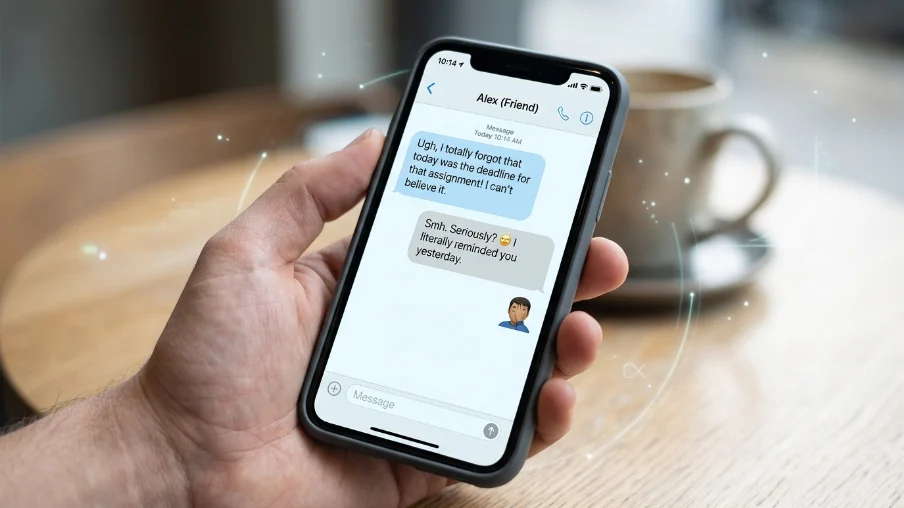
SMH stands for “shaking my head” and is used in texting and online communication to express disappointment, disbelief, or frustration with someone’s words or actions. It’s similar to saying “I can’t believe this” or “that’s ridiculous” without typing out a full sentence. Common across all major platforms including WhatsApp, Snapchat, TikTok, and Instagram.
You’re scrolling through your group chat, and suddenly someone drops “smh” in response to a message. Maybe you’ve seen it on TikTok comments or in a Snapchat story, and you’re lowkey confused about what it actually means. Fr, you’re not alone.
“Smh” is one of the most widely used internet acronyms out there, but if you don’t know what it stands for, it can leave you feeling completely lost in conversations. The truth is, understanding “smh” isn’t just about knowing the definition, it’s about grasping the vibe, the tone, and the context behind it.
In this guide, we’ll break down everything you need to know about “smh meaning in text,” including how to use it correctly, when to avoid it, and how to respond when someone sends it your way. By the time you’re done reading, you’ll be using “smh” like a pro and never feeling left out of the conversation again.
QUICK ANSWER BOX
| Element | Details |
| Meaning | Shaking My Head |
| Context | Texting, social media, online chats |
| Usage | Expressing disappointment, disbelief, or frustration |
| Platforms | WhatsApp, Snapchat, TikTok, Instagram, X (Twitter), Facebook, Discord |
| Example | “He forgot our anniversary again, smh” |
| Tone | Frustrated, disappointed, amused disapproval |
What Does “Smh” Mean in Text?
The Core Definition
At its most basic level, “smh” stands for “shaking my head.” It’s an internet acronym used to convey disbelief, disappointment, frustration, or sometimes even amusement at something someone has said or done.
Think about the physical gesture of shaking your head. You know that moment when someone says something so ridiculous that you literally shake your head in disbelief? That’s exactly what “smh” captures just in text form.
Ngl, it’s one of those acronyms that’s become so embedded in internet culture that people use it without even thinking. It’s like the digital equivalent of an eye roll, a sigh, or a facepalm, all rolled into one.
The Evolution of “Smh”
“Smh” actually traces its roots back to early internet chat rooms and text messaging culture. It gained significant traction on platforms like Twitter (now X) and Tumblr in the early 2010s, where character limits made acronyms essential for quick communication.
Over time, it’s evolved beyond just expressing disappointment. Depending on context and delivery, “smh” can convey:
- Pure frustration – “I stayed up all night studying and still failed, smh”
- Disappointment in someone – “She promised she’d be there and ghosted, smh”
- Amused disbelief – “He really tried to use a coupon from 2019, smh”
- Shared exasperation – “The WiFi went out AGAIN, smh”
- Sarcastic judgment – “You ate the last slice of pizza? Smh my head”
Why People Use “Smh” Instead of Typing It Out
Let’s be real, typing “shaking my head” every time you want to express disappointment would get old fast. “Smh” is quick, efficient, and gets the point across instantly. It’s become a shorthand that doesn’t just save time; it adds a layer of casual, relatable authenticity to conversations.
Plus, there’s something about using acronyms that creates an in group feeling. When you use “smh” correctly, it signals that you’re plugged into internet culture and understand the unwritten rules of digital communication.
The Emotional Spectrum of “Smh”
Understanding “smh meaning in text” requires going beyond the literal definition to understand the emotional weight it carries. Here’s a deeper breakdown of what “smh” really communicates:
Disappointment
When someone uses “smh” in response to your actions, it often signals that they expected better from you. It’s not quite anger, it’s more like a disappointed parent’s energy.
Example: “You forgot to pick up the milk again? Smh”
Disbelief
Sometimes “smh” is used when something is so absurd that you can’t even process it properly. It’s the digital equivalent of doing a double take.
Example: “He actually thought the earth was flat, smh”
Frustrated Resignation
This is when you’ve accepted that something is frustrating but you’re too tired to argue about it. “Smh” becomes your way of saying “this is ridiculous but whatever.”
Example: “Another late night at work, smh”
Playful Shaming
Among friends, “smh” can be used to gently tease someone without causing genuine offense. It’s a way of calling someone out while keeping the vibe light.
Example: “You wore that shirt to the party? Smh my head”
Is “Smh” Always Negative?
Not necessarily. No cap, “smh” can actually be used in positive or neutral contexts when the situation is just too funny or ironic to believe.
For instance, if your friend tells you they accidentally texted their boss instead of their group chat with a ridiculous message, you might respond with “smh” while actually finding the situation hilarious. In this case, “smh” means something closer to “I can’t believe you did that” rather than “I’m genuinely disappointed in you.
The key is reading the room and understanding the relationship dynamic. With close friends, “smh” is often just playful banter rather than serious judgment.
When to Use “Smh”
Knowing when to use “smh” is just as important as knowing what it means. Here are the most common scenarios where “smh” fits naturally:
Reacting to Bad News
When someone shares disappointing information, “smh” can show solidarity and shared frustration.
Example:
Friend: “They cancelled the concert”
You: “Smh, I was so excited for that”
Responding to Foolishness
When someone does something that makes you question their decision making, “smh” is your go to.
Example:
Friend: “I spent $200 on a game I don’t even play”
You: “Smh, could’ve bought something useful”
Expressing Cultural Frustration
People often use “smh” to comment on broader societal issues or current events.
Example: “The prices are going up again, smh”
Adding Emphasis to Sarcasm
“Smh” can amplify sarcastic comments, making it clear you’re not being serious.
Example: “Yeah, because THAT makes total sense, smh”
When NOT to Use “Smh”
For real, there are times when dropping an “smh” is a bad move. Here’s when to avoid it:
Serious or Emotional Situations
If someone is genuinely upset or sharing vulnerable information, responding with “smh” can come across as dismissive and uncaring.
Professional Communication
No cap, using “smh” in work emails, professional messages, or formal settings is a hard pass. It undermines your credibility and seems unprofessional.
When You Don’t Know the Person Well
Using “smh” with someone you’ve just met or don’t know well can be perceived as judgmental or rude. Save it for people who understand your communication style.
To Someone in Authority
Your boss, teacher, or parents probably won’t appreciate an “smh” in response to them. Keep it respectful.
How to Respond to Someone Using “Smh”
If someone hits you with an “smh,” here’s how to handle it:
Acknowledge and Clarify
If you’re unsure why they used it, don’t be afraid to ask. It shows you care about understanding their perspective.
Example:
Them: “I didn’t want to go anyway, smh”
You: “What happened? Did something go wrong?”
Explain Your Side
If you feel misunderstood, explain your reasoning without being defensive.
Example:
Them: “You didn’t check the weather, smh”
You: “I checked this morning and it said sunny, I swear”
Match Their Energy
If it’s playful banter, respond in kind.
Example:
Them: “You got here late again, smh”
You: “Better late than never, right? 🤷♀️”
Ask Questions
Show you’re engaged and want to understand the situation better.
Example:
Them: “The directions were so confusing, smh”
You: “Did you try using GPS instead?”
Use Empathy
If the “smh” comes from a place of genuine frustration, acknowledging their feelings can de-escalate tension.
Example:
Them: “I can’t believe this, smh”
You: “I get it, that’s super frustrating”
Real Life Conversation Examples
Conversation 1: Disappointment in a Friend’s Actions
Jake: “Bro, I told her I’d call her back and then I fell asleep for 4 hours”
You: “Smh, she probably thinks you ghosted her”
Jake: “I know, I feel terrible fr”
You: “Just call her now and explain, you’ll be good”
Jake: “Bet, I’m doing it right now”
Conversation 2: Reacting to Silly Behavior
Mia: “I just tried to pay for coffee with a gift card that expired in 2019”
You: “Smh my head, did they let you use it?”
Mia: “No, I had to pay full price 😭”
You: “That’s a big L, fr”
Conversation 3: Professional Frustration (Informal Context)
Alex: “My manager just asked me to redo the entire presentation because she didn’t like the font”
You: “Smh, what’s wrong with the font?”
Alex: “I used Arial instead of Calibri, ngl I’m losing it”
You: “That’s so unnecessary, I’d be annoyed too”
Conversation 4: Playful Teasing Among Friends
Sarah: “I literally just ate a whole pizza by myself”
You: “A whole pizza? Smh, no cap you’re wild for that”
Sarah: “No regrets, it was fire”
You: “I mean, you do you, fr
Conversation 5: Reacting to Surprising News
Dylan: “So, I may or may not have accidentally liked my ex’s post from 3 years ago”
You: “SMH, did they see it?”
Dylan: “Yeah, they liked it back 💀”
You: “That’s actually reckless, I can’t even”
Platform Specific Meaning
On WhatsApp, “smh” is commonly used in both individual and group chats. It often appears as a quick reaction to someone’s message, similar to using a reaction emoji. People on WhatsApp tend to use “smh” more casually than on other platforms because it’s typically used with people they know personally.
Example:
Group Chat: “Who took my leftovers from the fridge?”
You: “Smh, not me this time”
Snapchat
Snapchat users often incorporate “smh” into their snaps or chat conversations. Given the platform’s younger demographic, “smh” is used frequently and sometimes even in short video captions. It’s also common to see “smh” used in response to Snapchat stories, especially if someone’s story is making questionable life choices.
Example on Snapchat:
Caption on a story: “When you fall asleep at 3pm and wake up at midnight, smh”
TikTok
On TikTok, “smh” appears everywhere in comments, video captions, and even as audio cues for skits. TikTok users often use “smh” to react to videos that are cringeworthy, frustrating, or just too unbelievable to be real. The “smh” comment section is basically a badge of honor for TikTok creators who make particularly chaotic content.
Example TikTok Comment:
Video: Someone trying to cook and accidentally setting off the fire alarm
Comment: “Smh, but honestly I’d do the same thing”
Instagram users incorporate “smh” into comments, stories, and DMs. It’s particularly popular in comments on posts that contain controversial opinions or questionable decisions. People also use “smh” in their own captions to acknowledge when they’ve done something foolish.
Example: “Spent two hours getting ready just to stay home, smh”
X (Formerly Twitter)
X is where “smh” truly thrives. The platform’s fast paced, meme heavy culture makes “smh” the perfect one size fits all reaction. X users use “smh” to comment on news, celebrity drama, and everyday frustrations. It’s basically the default reaction when you’re scrolling through the timeline.
Example Tweet: “The new policy changes make no sense, smh”
On Facebook, “smh” tends to be used by a slightly older demographic, often in comments on news articles or in response to family drama. It’s also commonly used in Facebook groups, particularly in parenting or community groups where people share frustrating experiences.
Example: “My neighbor’s dog barks all night and they won’t do anything about it, smh”
Discord
Discord users, especially in gaming communities, use “smh” to react to bad plays, unfortunate game outcomes, or questionable decisions made by teammates. It’s often combined with emojis or gifs for maximum impact.
Example:
Gamer: “I accidentally threw the grenade at myself”
You: “Smh, that’s a pro gamer move right there”
Alternative Meanings and Variations
“Smh My Head”
You might occasionally see “smh my head” used in text. This is just a playful way to emphasize the acronym, similar to saying “LOL out loud.” People use “smh my head” to double down on their disappointment or disbelief.
Example: “You really thought that would work? Smh my head”
“Smdh”
“SMDH” stands for “shaking my damn head.” It’s essentially “smh” but with more emphasis and intensity. Use this when you want to express stronger frustration or disappointment than regular “smh” conveys.
Example: “He still hasn’t paid me back from three months ago, smdh”
“Smfh”
SMFH” means “shaking my fucking head.” This is the most intense version of “smh” and should be reserved for situations that genuinely make you angry or incredibly frustrated. Fair warning: using “smfh” is considered informal and can come across as aggressive.
Example: “They increased the rent again with zero warning, smfh”
“Smh” as a Pun
Sometimes people use “smh” in a literal sense, playing on the words “shaking my head” in a physical or humorous way.
Example: “I shook my head so hard I gave myself a headache, smh” – a joke that uses both the acronym and its literal meaning.
“Smh” in Internet Memes
“Smh” has become a staple of internet meme culture. It’s often paired with images of people shaking their heads in real life, or used ironically in memes that highlight ridiculous situations. Memes featuring “smh” frequently go viral for perfectly capturing relatable frustrations.
Example Meme Format:
A picture of someone staring into the camera like they’re on “The Office”
Caption: “When they say something so foolish you have to smh”
Related Terms and NLP Variations
Synonyms and Similar Acronyms
- Facepalm – Expressing embarrassment or frustration at someone’s stupidity
- Sigh – A verbal sign of frustration or resignation
- I can’t even – Being so overwhelmed by something that you can’t form a coherent thought
- Fml – “F*ck my life,” expressing frustration about a situation
- Yikes – Expressing shock, embarrassment, or awkwardness
- Frustrated sigh – Same energy as “smh” but in emoji form (😤)
Related Emojis
People often combine “smh” with emojis to emphasize their feelings:
- 🤦 – Facepalm, when “smh” isn’t enough
- 😩 – Weary face for extra frustration
- 😤 – Triumph or frustration
- 💀 – Dying of laughter, often paired with “smh” in ironic situations
- 🙄 – Eye roll, basically “smh” in emoji form
Phrases That Mean the Same Thing
- “I can’t believe this”
- “That’s ridiculous”
- “Unbelievable”
- “Are you serious?”
- “You’ve got to be kidding me”
- “I’m speechless”
- “What were they thinking?”
How “Smh” Differs from Similar Acronyms
| Acronym | Meaning | Vibe |
| SMH | Shaking My Head | Disappointment, disbelief |
| SMDH | Shaking My Damn Head | Stronger frustration |
| SMFH | Shaking My F*cking Head | Anger, intense frustration |
| FML | F*ck My Life | Self directed frustration |
| IDK | I Don’t Know | Uncertainty, confusion |
| IKR | I Know Right | Agreement, shared understanding |
| OMG | Oh My God | Shock, excitement |
How to Reply When Someone Uses “Smh”
Acknowledge Their Feelings
Show that you understand why they’re shaking their heads.
Example:
Them: “They messed up my order again, smh”
You: “That’s so annoying, I’d be frustrated too”
Ask for Clarification
Sometimes people use “smh” without much context. Gently asking why shows you care.
Example:
Them: “Smh, this is just perfect”
You: “What happened? You okay?”
Respond with Humor
If the vibe is light, a playful reply can keep the conversation fun.
Example:
Them: “You were supposed to bring snacks, smh”
You: “I’m a snack, does that count? 😂”
Mirror Their Energy
When in doubt, match their level of enthusiasm or frustration.
Example:
Them: “Smh, this assignment is impossible”
You: “Fr, I have no idea what I’m doing either”
Validate Their Feelings
Acknowledge their frustration without trying to fix it immediately.
Example:
Them: “I have to work this weekend, smh”
You: “That’s rough, I’d be upset too”
Misinterpretations of “Smh”
Misinterpretation 1: “Smh” Means “So Much Hate”
No cap, people new to internet culture sometimes think “smh” means “so much hate.” While it’s a logical guess, it’s completely wrong. “Smh” is about shaking your head, not spreading negativity.
Misinterpretation 2: “Smh” Means “Someone Help”
In some contexts, people mistakenly think “smh” is a call for help. While it can express frustration, it’s not a genuine cry for assistance.
Misinterpretation 3: “Smh” Means “Suck My Head”
This is a common but incorrect guess. Suck my head” isn’t a phrase people use, and “smh” definitely doesn’t mean that.
Misinterpretation 4: “Smh” Is Always Negative
As we’ve covered, “smh” can be playful, sarcastic, or even affectionate depending on context. Assuming it’s always negative can cause unnecessary tension.
Misinterpretation 5: “Smh” Stands for “So Much Hate”
Another common misreading, but again, not accurate. The head shaking gesture is the key here.
When NOT to Use “Smh” (Situations to Avoid)
Professional Settings
For real, using “smh” in a work email or professional message is a fast track to looking unprofessional. Keep it in your personal conversations.
Better Options: “I’m disappointed with the outcome,” “That’s frustrating,” or “I disagree with this decision.”
Formal Writing
You won’t see “smh” in academic papers, news articles, or formal documents. There’s a time and place for internet slang, and formal writing isn’t it.
Sensitive Situations
If someone shares something serious or personal, an “smh” can come across as dismissive and cold. Read the room.
With Non Native English Speakers
Not everyone is familiar with internet acronyms, and using “smh” with someone who doesn’t know what it means can be confusing.
When You Actually Disagree
If you genuinely disagree with something, “smh” might not be the best way to express it. It can seem passive aggressive.
Usage Tips for Mastering “Smh”
Know Your Audience
Understanding who you’re talking to is key. Friends and peers? Go ahead. Boss or elders? Skip it.
Use Sparingly
Overusing “smh” can make you seem perpetually annoyed or dramatic. Save it for moments that genuinely warrant a head shake.
Combine with Context
“Smh” works best when there’s enough context for the other person to understand why you’re shaking your head.
Don’t Overthink It
“Smh” is casual, so don’t stress about using it perfectly. The more naturally you use it, the more authentic you’ll sound.
Use It for Disappointment, Not Anger
If you’re genuinely angry, “smh” might not carry enough weight. Use stronger language for serious situations.
Read the Room
The same “smh” can mean different things in different conversations. Pay attention to tone and context.
Pair with Emojis
Emojis can help clarify whether you’re being serious, playful, or sarcastic.
Example: “Smh 🤦” means extra frustration. Smh 😂” means amused disbelief.
Be Authentic
Don’t use “smh” just to fit in, use it because it genuinely fits the moment.
The Cultural Significance of “Smh”
“Smh” and Internet Culture
“Smh” isn’t just an acronym, it’s a cultural marker that says a lot about someone’s digital fluency. When you use “smh,” you’re participating in a shared language that connects millions of people across generations, platforms, and locations. It’s part of what makes internet communication feel more immediate and human.
“Smh” vs. Traditional Communication
In the past, expressing disappointment required more words or face to face interaction. “Smh” compresses that emotion into three letters, making digital communication more efficient while still capturing the nuance of the head shaking gesture.
Why “Smh” Persists
Texting acronyms come and go, but “smh” has stuck around because it fills a genuine communication gap. It’s short, expressive, and relatable, a combination that’s hard to beat.
The Future of “Smh”
“Smh” has been around for over a decade and shows no signs of disappearing. If anything, its usage has expanded to new platforms and demographics. As long as people shake their heads at ridiculous situations, “smh” will have a place in digital language.
Frequently Asked Questions
Q1: What does smh stand for in texting?
A: “SMH” stands for “shaking my head” and is used in texting to express disbelief, disappointment, or frustration at something someone has said or done.
Q2: What is the full meaning of smh?
A: The full meaning of smh is “shaking my head.” It mimics the physical gesture of shaking your head in disappointment or disbelief.
Q3: Is smh rude?
A: “Smh” isn’t inherently rude, but it can come across as judgmental or dismissive depending on context. Use it carefully with people you don’t know well.
Q4: What does smh mean from a girl?
A: From a girl, “smh” typically means the same thing as it does from anyone else shaking her head in disbelief or disappointment. Context matters more than the sender’s gender.
Q5: What does smh mean on WhatsApp?
A: On WhatsApp, “smh” means “shaking my head.” It’s commonly used in both individual and group chats to express frustration or disbelief.
Q6: What does smh mean on Snapchat?
A: On Snapchat, “smh” is used in snaps, chat messages, and story captions to express disappointment or amused disbelief at something.
Q7: What does smh mean on TikTok?
A: On TikTok, “smh” appears frequently in comments and video captions, usually reacting to cringeworthy, frustrating, or wildly unbelievable content.
Q8: What is the difference between smh and smdh?
A: “SMDH” stands for “shaking my damn head” and expresses stronger frustration or disappointment than regular “smh.”
Q9: Is “smh my head” redundant?
A: Yes, “smh my head” is technically redundant because the “h” in “smh” already stands for “head.” But it’s used playfully to emphasize the emotion.
Q10: Can “smh” be used in professional settings?
A: No, “smh” is informal internet slang and should be avoided in professional emails, work messages, and formal communication.
Q11: How do you respond to “smh”?
A: You can acknowledge the person’s feelings, ask for clarification, respond with humor, mirror their energy, or validate their emotions.
Q12: What does “smh” mean in a relationship context?
A: In a relationship, “smh” often signals disappointment with a partner’s actions, like forgetting a date or making a poor decision. Use it carefully to avoid unnecessary tension.
Q13: Is “smh” still popular in 2026?
A: Yes, “smh” remains widely used across all major social media platforms and continues to be a staple of digital communication.
Q14: Does “smh” mean “so much hate”?
A: No, some people mistakenly think “smh” means “so much hate,” but it actually stands for “shaking my head.
Q15: What is the difference between “smh” and “facepalm”?
A: “Smh” means shaking your head in disappointment, while “facepalm” means putting your hand on your face in frustration or embarrassment. They convey similar emotions but use different gestures.
Q16: Can “smh” be used sarcastically?
A: Absolutely. “Smh” is frequently used sarcastically to highlight how ridiculous or ironic a situation is.
Q17: What does “smh” mean in gaming?
A: In gaming, “smh” is often used to react to bad plays, unfortunate game outcomes, or questionable teammate decisions.
Q18: Is there a difference between “smh” and “smfh”?
A: Yes, “smfh” stands for “shaking my f*aching head” and expresses stronger frustration or anger compared to “smh.”
Q19: Does “smh” have different meanings in different contexts?
A: While the literal meaning stays the same, “smh” can convey disappointment, disbelief, frustration, or amused disbelief depending on the situation.
Q20: Can “smh” be used in a positive way?
A: Yes, “smh” can be playful and even affectionate when used among close friends, often to tease someone or react to something surprisingly silly.
Conclusion
“Smh” is more than just a four character acronym it’s a powerful tool for digital communication that captures frustration, disbelief, and sometimes even amusement in a concise and relatable way. No cap, mastering “smh meaning in text” is essential for anyone who wants to navigate modern internet conversations with confidence.
Whether you’re shaking your head at a friend’s questionable life choices, reacting to frustrating news on Twitter, or just venting about a bad day, “smh” has you covered. But remember: context is everything. Use it wisely, keep it casual, and never drop an “smh” in a professional email.
Now that you know exactly what “smh” means, when to use it, and how to respond to it, you’re ready to communicate with digital fluency. So the next time someone sends you an “smh,” you’ll know exactly what they’re saying and you’ll have the perfect reply ready to go.
Fr, go ahead and use “smh” in your next conversation. Just make sure you’re using it right. No cap.





15 thoughts on “SMH Meaning in Text| What Does SMH Stand For ? (2026 Guide)”