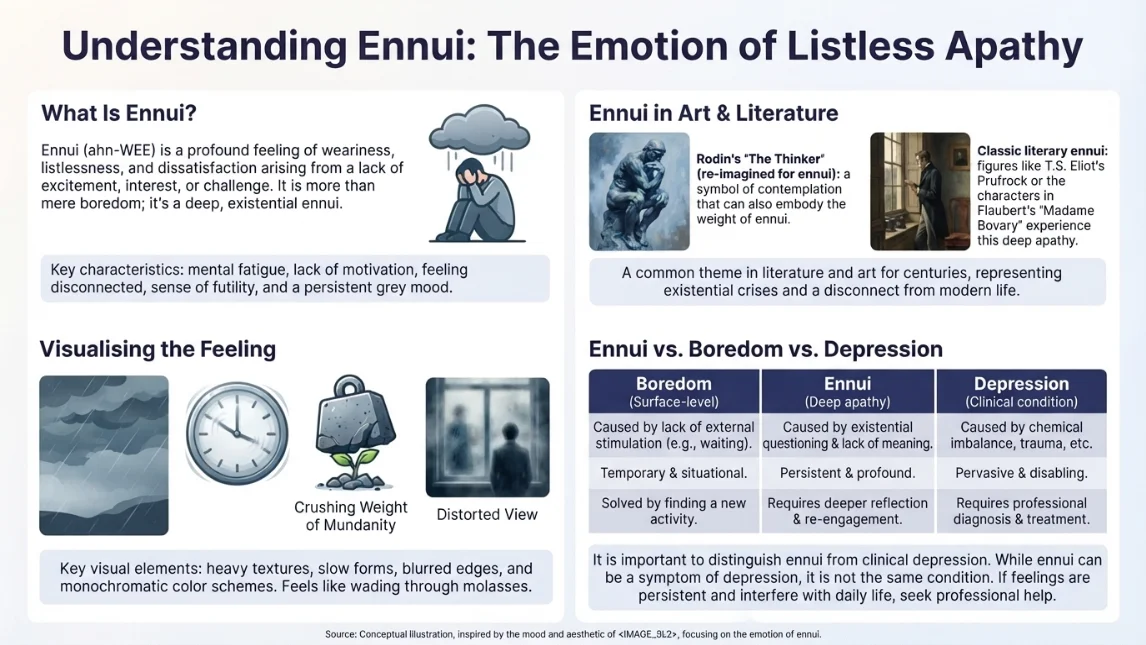
Ennui is a profound state of mental weariness, listlessness, and dissatisfaction arising from a lack of interest, occupation, or excitement. Derived from French, it describes a deeper, existential dissatisfaction that goes far beyond standard temporary boredom.
The modern digital world provides endless stimulation, yet millions of people feel more disconnected than ever. Consequently, a specific literary term has re-entered mainstream conversations to describe this exact feeling. If you have noticed the word “ennui” trending recently, you might wonder what it means. Furthermore, you might want to know how it differs from regular boredom.
Understanding this word helps us decode a complex human emotion. For example, popular culture recently highlighted this state of mind by featuring it as a character in Disney Pixar’s animated film Inside Out 2. Therefore, learning the true definition of ennui is incredibly useful for modern self-care, psychological awareness, and cultural literacy. This comprehensive guide breaks down the complete meaning of the term, analyzes its historical roots, and explores how it manifests across digital platforms.
Quick Answer Box
| Attribute | Description |
| Primary Meaning | A deep, chronic feeling of listlessness, mental weariness, and existential dissatisfaction. |
| Common Context | Discussing routine exhaustion, creative burnout, or a general lack of life purpose. |
| Primary Platforms | TikTok, Instagram, Letterboxd, X (Twitter), Reddit, Substack. |
| Tone | Melancholic, passive, analytical, reflective, and sometimes mildly cynical. |
| Common Variations | Ennui-ridden, experiencing ennui, profound listlessness. |
What Does It Mean?
To truly grasp the concept of ennui, you must look past simple definitions. This word describes a specific state of psychological exhaustion. When you experience it, the world around you feels entirely uninteresting. Moreover, you lose the motivation to change your current circumstances because everything feels fundamentally pointless.
The French Origins
Linguistically, the English language adopted this term directly from French. In old French, the word evolved from the Latin phrase in odio, which translates literally to “in hatred” or “loathsome.” Consequently, the word carries a historical weight of emotional pain. It entered the English vocabulary during the 18th century, primarily used by the aristocracy to describe the heavy dissatisfaction of having too much free time and too little purpose.
The Literary Connection
Historically, European writers and philosophers utilized the term to describe a distinct cultural malady. For instance, the famous French poet Charles Baudelaire wrote extensively about it in his masterpiece Les Fleurs du mal. He viewed it as one of the worst emotional traps because it slowly drains a person’s creative energy and replaces it with cold indifference.
Full Definition
Psychologists define ennui as a state of chronic listlessness that combines emotional numbness with a lack of direction. It is crucial to note that it is not simply a synonym for standard boredom. While regular boredom means you cannot find something interesting to do in the moment, this deeper state means nothing feels capable of ever being interesting again.
Unlike temporary boredom, which a quick activity can solve, ennui is a systemic emotional fog. Therefore, finding a new hobby or watching a movie rarely cures it.
To further clarify the concept, we can look at how it compares to related mental states:
- Boredom: Temporary situational dissatisfaction. For example, waiting at a bus stop causes standard boredom.
- Ennui: A prolonged, pervasive sense of existential emptiness. For instance, realizing your entire career path feels meaningless causes this state.
- Apathy: A complete lack of feeling, emotion, or concern about anything at all.
- Melancholy: A deep, pensive, and long-lasting sadness that often carries a sense of artistic reflection.
Context & Usage
Deploying this term correctly requires a strong understanding of nuance. Because it carries literary and historical weight, people usually use it to describe significant, widespread emotional phases rather than brief moments of daily frustration.
The Modern Workplace
In today’s corporate world, employees frequently encounter this feeling. When an individual performs the exact same repetitive digital tasks for years without seeing any real-world impact, their enthusiasm vanishes. Consequently, they do not just experience standard workplace fatigue. Instead, they enter a state of professional weariness where the entire concept of career advancement feels hollow.
Creative Burnout
Artists, writers, and musicians also experience this emotional trap regularly. When a creator loses their passion, their projects suddenly look uninspiring. Therefore, they describe their creative block as a season of artistic listlessness. This specific context highlights how the feeling stems from an internal lack of inspiration rather than an external lack of things to do.
Real-Life Examples and Chat Scenarios
To help you understand how this sophisticated word works in natural modern dialogue, let us analyze several realistic communication scenarios across various digital contexts.
Conversation Example 1: Professional Burnout
- User A: “Are you still planning to apply for that big promotion next month?”
- User B: “Honestly, no. I am feeling this deep sense of corporate ennui lately. A higher salary won’t make these spreadsheets any less soul-crushing.”
- User A: “I get it, because the routine has been incredibly repetitive for all of us this year.”
Conversation Example 2: Creative Block
- User A: “Your sketchbook has been completely empty for weeks. What is going on?”
- User B: “I am trapped in a total state of creative ennui, ngl. Every color palette I try looks incredibly boring and uninspired.”
Conversation Example 3: Academic Fatigue
- User A: “Are you ready to start studying for our history finals tonight?”
- User B: “Not at all, because a wave of academic exhaustion hit me today. I am just staring at my open textbooks with total indifference.”
- User A: “Same, fr. Let us take a break before our brains melt entirely.”
Conversation Example 4: Lifestyle Reflection
- User A: “You have skipped our weekend outings three times in a row now. Is everything okay?”
- User B: “Yeah, everything is fine physically. However, I have just been dealing with a weird existential weariness. Going out to the same crowded bars simply feels pointless right now.”
Conversation Example 5: Film Discussion
- User A: “What did you think of that new French indie movie?”
- User B: “The cinematography was stunning, but the main character’s constant attitude of privilege and sadness got a bit old. It was basically two hours of pure cinematic listlessness.”
Platform-Specific Meaning
While the core psychological definition of the word remains consistent, the way internet users discuss it varies dramatically across different online ecosystems.
TikTok
On TikTok, creators frequently use the word alongside footage of the character from Inside Out 2. Users create short videos showing themselves lounging dramatically on couches or ignoring phone notifications. Consequently, the platform has turned a heavy philosophical concept into a relatable, aesthetic lifestyle trend for younger generations.
On Instagram, the term appears heavily in aesthetic photography circles. Users often caption moody, desaturated photos of rainy rainy windows, empty coffee shops, or solo train rides with the word. Therefore, Instagram culture transforms the emotional state into a visual mood, lowkey romanticizing the feeling of quiet isolation.
Letterboxd
Because Letterboxd caters specifically to film enthusiasts, the term appears constantly in movie reviews. Users deploy it to criticize slow-moving art films or to praise directors who successfully capture human isolation on screen. For example, reviews of Sofia Coppola or Michelangelo Antonioni films regularly feature the word.
X / Twitter
On X, the word takes on a highly sarcastic and fast-paced tone. Users tweet about experiencing the feeling over minor daily inconveniences, such as waiting for a software update to finish or sitting through a long corporate Zoom meeting. Thus, the platform uses irony to make light of a heavy emotion.
Reddit features deep, text-based discussions about this mental state on subreddits like r/philosophy, r/burnout, and r/existentialism. Here, users write long paragraphs analyzing how modern technology, social isolation, and remote work contribute to a widespread sense of societal detachment.
Substack
On Substack, independent writers analyze the trend through cultural essays. They examine how continuous digital stimulation affects our attention spans. They argue that consuming too much short-form content eventually desensitizes our brains, which ultimately triggers a deep, protective state of psychological weariness.
Alternative Meanings and Nuances
Although the word traditionally carries a negative connotation, modern internet culture has added several layers of nuance and alternative interpretations to its use.
The Aesthetic Aspect
In certain online subcultures, displaying this emotion is seen as a sign of sophistication or intellectual depth. This stems from historical associations with the 19th-century European upper class. Consequently, some users adopt a persona of world-weariness to make themselves appear more artistic, thoughtful, or deeply philosophical to their followers.
The Adaptive Protection Aspect
From a psychological perspective, some experts view this state as a natural defense mechanism. When a person becomes completely overwhelmed by stress, anxiety, or digital overstimulation, their mind may trigger a wave of listlessness. By making everything feel uninteresting, the brain forces the individual to slow down and rest.
Related Terms / NLP Variations
To expand your vocabulary and understand the linguistic framework surrounding this word, consider these related terms that describe similar emotional landscapes:
- Weltschmerz: A German word that translates to “world-weariness,” describing a deep sadness caused by realizing the physical world can never match the ideal world of your imagination.
- Taedium Vitae: A Latin phrase meaning “weariness of life,” which describes a profound, exhausting disgust with the daily routine of existence.
- Spleen: A term used by 19th-century French writers to describe a combination of intense depression, boredom, and low-grade anger.
- Anhedonia: A psychological condition characterized by a total inability to feel pleasure from activities that you normally enjoy.
How to Respond / Reply
When someone opens up to you and uses this word to describe their current mental state, your response should validate their feelings without offering cheap, superficial solutions.
If a Colleague Shares It
If a coworker admits they are facing severe professional listlessness, avoid telling them to simply “cheer up” or “work harder.” Instead, acknowledge the validity of their burnout and suggest a meaningful pause.
- Appropriate Response: “I completely understand why you feel that way. The project load has been incredibly repetitive lately. Maybe we can chat with management about shifting our focus next quarter.”
If a Friend Explains It
When a close friend describes a sense of lifestyle emptines, offer your presence rather than a list of activities. Because they feel nothing matters, pushing them into a high-energy social situation will likely backfire.
- Appropriate Response: “That sounds incredibly exhausting to deal with. You don’t have to force yourself to be exciting company right now. If you want, I can come over and we can just hang out quietly.”
Misinterpretations
Because the word is relatively uncommon in casual conversation, people frequently misinterpret its meaning and intent.
Confusing It with Clinical Depression
The most common mistake is assuming that this state is exactly identical to clinical depression. While they share overlapping symptoms like lack of energy and loss of interest, the term often describes a temporary philosophical or situational phase rather than a chronic medical condition. Depression involves deep biological components, whereas this weariness is often a direct reaction to an unstimulating environment.
Assuming It is Just Pretentious Boredom
Many critics dismiss the word as a pretentious way to say you have nothing to do. However, this view ignores the profound emotional weight of the experience. It does not mean you lack tasks; it means the tasks available to you feel entirely devoid of value.
When NOT to Use It
Using sophisticated vocabulary in the wrong setting can make you sound detached or insensitive. Therefore, you should avoid the term in specific situations:
- During Acute Crises: If someone is experiencing a sudden tragedy, describing their grief or shock with this word is completely inappropriate.
- Simple Daily Delays: Do not use the word to describe waiting five minutes in a grocery store line. Doing so cheapens the word’s actual meaning and makes you sound overly dramatic.
- In High-Stakes Environments: Avoid using the term when a manager asks why a crucial project is late. In that context, it will sound like a lack of professional responsibility rather than a valid emotional state.
Usage Tips
If you want to integrate this word into your writing or daily speech naturally, keep these practical tips in mind:
- Pronounce It Accurately: The word is pronounced “ahn-wee.” Avoid pronouncing the “t” or the “i” phonetically based on English rules.
- Match the Tone: Use the word in contexts that involve deep reflection, cultural analysis, or significant emotional burnout.
- Avoid Overuse: If you apply the term to every minor inconvenience, your audience will quickly stop taking your descriptions seriously.
FAQs
How do you pronounce ennui correctly?
The word is pronounced “ahn-wee.” Because it retains its traditional French pronunciation, you do not pronounce the letters according to standard English rules.
Is it a mental illness?
No, it is not a recognized mental illness or a clinical diagnosis. It is a psychological state and an emotional experience that humans encounter, though prolonged periods of listlessness should be discussed with a therapist.
Why is the character in Inside Out 2 named Ennui?
The filmmakers included the character to represent the complex emotional shifts that happen during adolescence. Teenagers frequently use world-weariness as a social shield to hide their vulnerabilities.
What is the main cause of this feeling?
The primary causes include severe overstimulation from digital media, lack of real-world social connection, hyper-repetitive daily routines, and a general absence of meaningful goals.
How can someone overcome deep listlessness?
Overcoming this state requires making small, intentional lifestyle adjustments. For example, reducing screen time, spending time in nature, pursuing a completely new creative hobby, or volunteering for a social cause can help break the cycle.
Can luxury or wealth cause this state?
Yes, historically the term was closely linked to wealth. When a person has all their material needs met instantly, they can easily lose the motivation to strive for goals, which leads to a distinct type of lifestyle weariness.
What is the difference between this feeling and apathy?
Apathy means a complete absence of any emotion whatsoever. This feeling, however, involves an active, uncomfortable awareness of your own lack of interest and dissatisfaction.
How long does a typical phase last?
The duration depends entirely on your environment and response strategies. It can last for a few days during a temporary period of burnout, or it can stretch into months if your lifestyle remains unstimulating.
Is the word used commonly in American English?
While it remains a sophisticated literary term, its usage has spiked significantly in the USA due to pop culture references and trending social media conversations about mental health.
Can children experience this emotion?
Young children rarely experience it because they find novelty easily. However, teenagers and young adults experience it frequently as their brains develop and they begin facing adult societal expectations.
Conclusion
Ultimately, the word provides a precise label for a complex, heavy human experience that regular language often struggles to describe. It captures that unique moment when endless choices and constant stimulation result in a profound sense of empty weariness. Rather than ignoring this feeling or fighting it with more screen time, we should treat it as an internal signal to pause, re-evaluate our routines, and seek genuine, real-world purpose. By acknowledging this mental state honestly, we can begin taking the necessary steps to restore inspiration, engagement, and genuine joy to our daily lives.

Andrew Morris is a writer at Meaninga.com who specializes in word meanings, slang, idioms and modern language trends. He creates clear, accurate and easy to understand content for everyday readers.







11 thoughts on “Ennui Meaning| Understanding the Psychology of Deep Boredom”