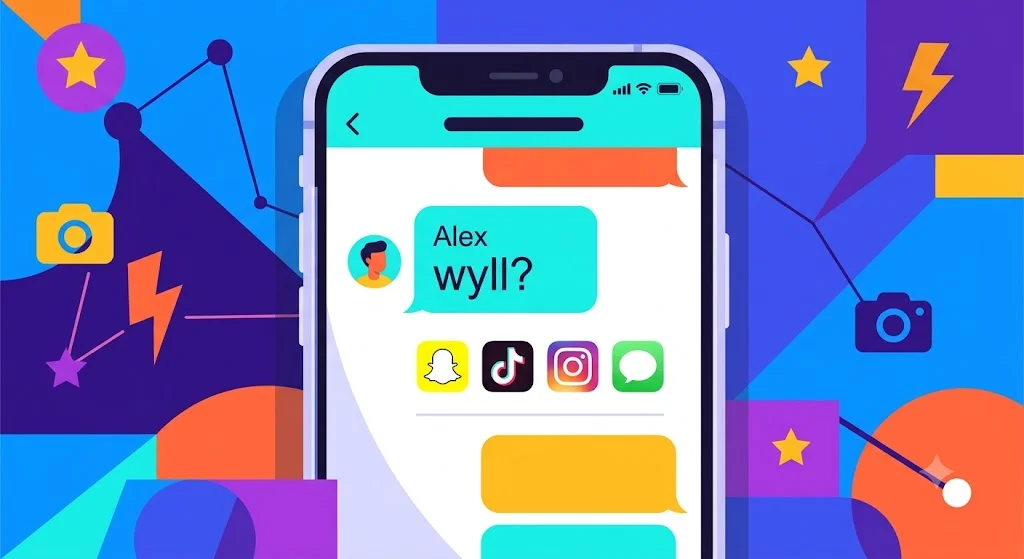
WYLL meaning in text is “what you look like?” People commonly use this abbreviation in online chats, especially on Snapchat and other social platforms, when they want to know what someone looks like. Depending on the conversation, it may be a request for a photo, a way to satisfy curiosity about a new contact, or an attempt to move an online conversation forward. The sender’s tone and your relationship can help clarify their intention.
When someone sends you WYLL, they are usually asking, “What you look like?” This popular texting abbreviation often appears when two people have started chatting online but have not seen each other. The sender may be curious about your appearance or hoping you will share a picture.
You may come across WYLL in Snapchat messages, TikTok conversations, or direct messages with someone you recently met online. For example, a new contact might send “wyll?” after a few messages to ask what you look like. Some people use it casually, while others may be trying to flirt or get to know you better.
Even so, WYLL does not automatically mean someone has romantic intentions. The meaning behind the question depends on the conversation and your connection with the sender. You also do not have to share a photo if you feel uncomfortable; a simple reply or a decision to keep your privacy is completely reasonable.
Quick Answer Box
| Attribute | Details |
| Primary Meaning | What you look like? |
| Context | Sent during early-stage digital conversations to request a photo or video. |
| Primary Platforms | Snapchat, TikTok, Instagram DMs, and text messaging. |
| Example Scenario | “We’ve been talking for an hour but wyll?” |
| Tone | Casual, direct, informal, and sometimes flirtatious. |
What Does wyll Meaning Actually Cover?
To truly grasp the concept, you must look at how digital communication strips away visual context. The acronym wyll translates directly to the question, “What you look like?” It functions as a highly efficient, lower-case shorthand designed to bypass formal grammar rules entirely. For instance, instead of typing out a complete sentence like “What do you look like?”, Gen Z users prefer the speed of a four-letter alternative.
The term originated naturally within the fast-paced ecosystem of mobile texting. Over time, it transitioned seamlessly onto multimedia-first platforms where visual identity is the primary form of currency. It represents a shift toward hyper-efficiency in text-based communication. Furthermore, the lowercase presentation is intentional, as capitalized letters can often alter the perceived emotional tone of a casual text conversation.
Contextual Dynamics and Nuances of the Term
Using this slang is rarely just about checking someone’s physical appearance; rather, it serves various social functions depending on the current state of the conversation. Understanding the subtle nuances behind the text can prevent awkward social interactions online.
Establishing Identity and Safety
In an era dominated by anonymous profiles and curated avatars, users frequently use this phrase as an informal verification tool. When you transition from a public comment section to private messages, verifying the identity of the person behind the screen becomes a priority. Consequently, asking this question helps users ensure they are talking to a real person and not a automated bot or a catfish account.
Flirtatious Signaling
In romantic or casual dating contexts, sending this acronym signals clear romantic interest. It indicates that the sender finds the conversation engaging enough to warrant visual progression. For example, if a conversation is going exceptionally well, transitioning to visual media adds a layer of intimacy that text alone cannot replicate.
Casual Curiosity
Sometimes, the motivation is purely social. If you have been playing an online game or discussing a shared hobby with someone for weeks, you naturally develop a mental image of them. Therefore, asking the question is simply a way to match a face to the digital personality you have grown to enjoy.
Real-Life Conversation Examples Using wyll
To help you visualize how this acronym integrates into everyday digital dialogue, analyze these five distinct, realistic chat scripts.
The Snapchat Icebreaker
- User A: Hey! Thanks for adding me back from the quick add list.
- User B: What’s up! Yeah, your stories looked pretty cool.
- User A: Haha thanks. I’m just chilling at home, wyll right now?
- User B: Sends a selfie wearing a casual hoodie Just watching Netflix!
The TikTok Comment Transition
- User A: Your comment on that travel video was hilarious.
- User B: I swear that airport always has the shocking delays lol.
- User A: Honestly true. We should chat more, add my snap?
- User B: Just added you! But wait, wyll? I don’t have a profile picture here.
The Gaming Lobby Follow-Up
- User A: GG! We absolutely carried that final round.
- User B: Facts, your sniper shots were totally out of control.
- User A: We need to squad up again tomorrow for sure.
- User B: Definitely down. By the way, wyll? Just curious who I’m gaming with.
The Casual Instagram DM
- User A: Yo, love your music taste. That playlist in your bio is fire.
- User B: Appreciate it! I spend way too much time organizing my tracks.
- User A: It pays off. Anyway, been chatting for a bit, wyll?
- User B: Sends a quick mirror selfie Thanks again for the playlist love!
The Blind Text Introduction
- User A: Hey, Sarah gave me your number. She said we have the exact same sense of humor.
- User B: Oh awesome! Yeah, she mentioned she was going to pass it along.
- User A: Sweet. Well, since we are starting fresh here, wyll?
- User B: Sends an image from a recent vacation This is me from last weekend!
Platform-Specific Breakdown
While the underlying definition remains identical across the internet, the cultural expectations surrounding the term change drastically depending on the app you are currently using.
How It Is Used on Snapchat
Snapchat is the undisputed home of this specific acronym. Because the platform architecture relies entirely on disappearing media, sending a request for an image is considered standard behavior. When someone asks you this question on Snapchat, they generally expect a real-time, unedited snap using the front-facing camera rather than a polished photo from your camera roll. Failing to send a live photo can sometimes be interpreted as a sign of dishonesty or insecurity.
The Role of wyll on TikTok
On TikTok, the acronym has transformed into a viral format for videos. Users often create short video clips with text overlays displaying the question. The video then cuts abruptly to a montage of their best photos, trend participation, or outfit reveals. Therefore, on this platform, the phrase functions less as a direct question and more as an invitation to showcase your aesthetic, personal style, or glow-up progression to a broader audience.
Instagram and Texting Dynamics
Within Instagram Direct Messages or standard SMS texting, the phrase carries a slightly more deliberate tone. Because these environments are historically text-heavy, introducing a request for visual representation means the conversation is escalating in importance. Users on Instagram will often reply by sending a temporary “disappearing” image or directing the sender to take a look at their pinned grid photos.
Alternative Meanings and NLP Variations of the Phrase
In the realm of natural language processing and evolving internet linguistics, tracking variations of terms prevents miscommunication. While the wyll meaning is overwhelmingly dominant as a physical request, you may occasionally encounter semantic variations or similar structures.
Structural Variations
| Acronym | Full Phrase Meaning | Primary Contextual Usage |
| WUU2 | What are you up to? | Used to ask about someone’s current activity. |
| WRU | Where are you? | Used to locate a friend or contact in real-time. |
| WBU | What about you? | Used to turn a question back to the other speaker. |
| WYD | What are you doing? | A casual conversational opener checking on availability. |
In rare technical subcultures or localized geographic dialects, users might occasionally twist the letters to mean “What you like listening to?” or “Will you leave later?” However, these alternative interpretations represent less than one percent of documented digital communication. If you see these four letters in a modern chat, it almost always relates to appearance.
Misinterpretations: When NOT to Use the Term
Using slang at the wrong moment can ruin a social interaction or make you appear highly unprofessional. Consequently, you must recognize the boundaries of casual internet acronyms.
Professional and Academic Environments
Never use this slang when communicating with employers, professors, colleagues, or clients. Sending a message like “Thanks for the resume review, wyll?” is entirely inappropriate. It violates professional boundaries and can easily be interpreted as harassment or extreme disrespect. Keep your professional communications strictly formal and completely free of casual internet shorthand.
Serious or Sensitive Conversations
If a friend is venting to you about a difficult breakup, a medical emergency, or a stressful day at work, do not introduce casual slang into the dialogue. For example, inserting a request for a photo during a deeply emotional conversation demonstrates a profound lack of empathy. It signals to the recipient that you are more interested in their physical appearance than their emotional well-being.
High-Context Group Chats
In large, fast-moving group chats where people are actively debating a specific topic, dropping this acronym out of nowhere disrupts the flow of conversation. It derails the discussion and makes the sender look self-absorbed or socially unaware.
How to Respond in Chat Comfortably
Receiving this text can sometimes feel slightly intimidating if you do not know the unwritten rules of digital etiquette. Fortunately, you have complete control over how you choose to respond based on your personal comfort level.
The Standard Direct Approach
If you feel entirely comfortable with the person asking, the most common response is to send a casual, unfiltered selfie. You do not need to overthink the photo. A simple picture showing your current environment, a smile, or a peace sign is perfectly sufficient to satisfy the request and keep the conversation moving forward.
The Curated Alternative
If you are not feeling confident about your current appearance because you just woke up or finished a workout, you can guide them to your existing profile. For instance, you can say, “I look like a mess right now, but check out my third Instagram post!” This fulfills the request without forcing you to take an uncomfortable real-time photo.
The Playful Deflection
If you prefer to maintain a bit of mystery or humor, you can respond using a funny meme, an animated GIF, or a picture of a celebrity. Replying with a picture of a funny cartoon character tells the other person that you are playful but not ready to share your actual face just yet.
Setting Firm Boundaries
You are never obligated to send a photo of yourself to anyone online. If a stranger sends you the acronym and it makes you feel uncomfortable, you can choose to ignore the message entirely, block the account, or state your boundaries clearly. A simple phrase like “I prefer not to share photos early on” is a perfectly acceptable response.
FAQs
1. Is the term considered a rude text message?
No, it is not inherently rude, but it is highly direct. Among teenagers and young adults, it is viewed as a standard conversational transition. However, if it is sent immediately as the very first message without a greeting, some users may find it slightly demanding or superficial.
2. Can I use this phrase in a formal email?
Absolutely not. This is an informal piece of internet slang reserved exclusively for casual social media chats and friendly text messaging. Using it in a professional email will undermine your credibility immediately.
3. What is the main difference between wyd and this acronym?
The difference lies entirely in the intent of the question. While wyd asks about your current actions (“What are you doing?”), this specific acronym asks exclusively about your physical appearance or current visual state.
4. Why do people prefer using this instead of asking for a picture directly?
Using shorthand lowers the social stakes of the request. Asking “Can you please send me a photo of yourself?” can feel intense, formal, or high-pressure. Conversely, typing a quick acronym keeps the vibe casual, low-key, and easy to decline.
5. Does the acronym imply a romantic interest?
Often, yes. While it can be used in a purely platonic, curious manner among internet friends, it is frequently used as a tool to gauge physical attraction during early-stage flirting.
6. Is this slang geographic or used worldwide?
While the term originated primarily within the United States, global social media platforms like TikTok have distributed it worldwide. Consequently, English-speaking users across Canada, the UK, and Australia use it regularly.
7. How should I reply if I do not want to send a selfie?
You can easily deflect the question with humor by sending a meme or a picture of a cute animal. Alternatively, you can explicitly state that you do not send photos to new contacts.
8. Why is the wyll meaning so popular specifically on Snapchat?
Snapchat’s entire interface is built around visual messaging. Because the app opens directly to the camera, asking a question that requires a visual response aligns perfectly with how the platform functions.
9. Can adults use this term safely?
While anyone can technically use internet slang, this specific acronym belongs primarily to Gen Z and Alpha youth culture. Adults using it in casual conversation may appear to be trying too hard to mimic youth trends.
10. Does sending this mean someone is catfishing me?
Not necessarily. In fact, people often send this text precisely because they want to ensure you are not catfishing them. It is a mutual tool used for identity verification in digital spaces.
Conclusion
The rapid rise of this acronym highlights how modern internet culture constantly redefines how humans connect. By transforming a multi-word question into a streamlined, four-letter tool, digital communities continue to prioritize efficiency and speed. Whether you use it to protect your safety, flirt with a crush, or simply joke around with friends, understanding the true meaning ensures you remain fluent in the language of the digital age. As social media platforms continue to evolve, staying informed about these linguistic shifts will help you communicate confidently, safely, and effectively across all digital spaces.







16 thoughts on “WYLL Meaning in Text| Why Someone Wants to See You”