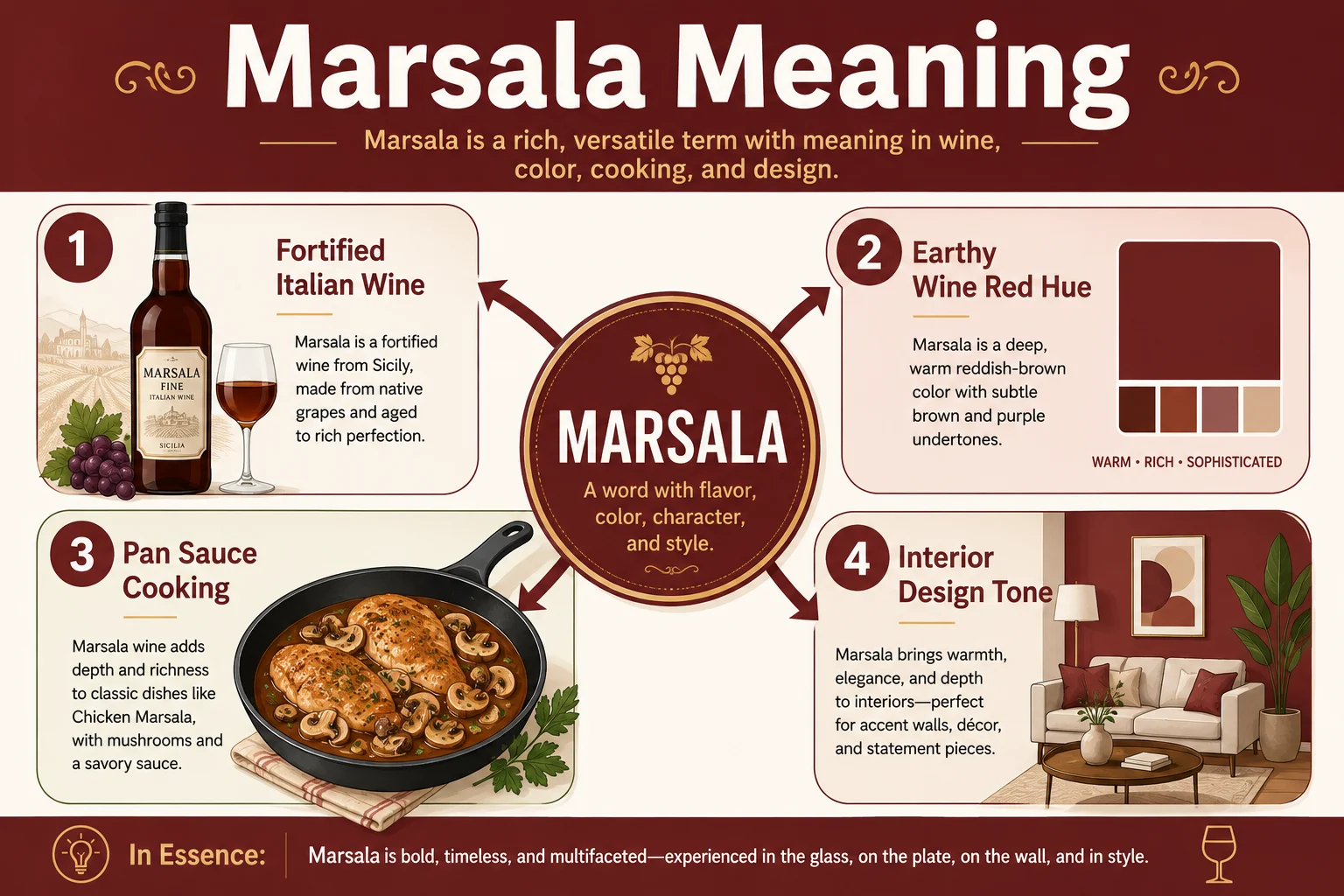
Marsala refers to a renowned fortified Sicilian wine and a sophisticated, earthy reddish-brown hue. Originating from western Sicily, the term represents culinary depth, warm aesthetic design, and timeless Italian elegance across fashion, home decor, and digital style discussions.
Understanding the complete marsala meaning helps you navigate conversations about fine Italian cooking, high fashion, interior design, and modern social media aesthetics. Furthermore, this rich term carries a fascinating history that spans centuries of Mediterranean tradition and contemporary lifestyle trends. Consequently, when people search for this phrase, they usually want to uncover whether it refers to a rich cooking wine, a classic Pantone color of the year, or a historic Italian coastal region.
Additionally, language evolves rapidly as digital creators embrace vintage color palettes and classic culinary traditions. For example, lifestyle influencers on Instagram frequently tag warm autumn wardrobes with the term. Similarly, home decorators use the concept to describe cozy, grounding interior paint tones. Therefore, grasping every dimension of the definition elevates your vocabulary and enhances your style awareness.
Quick Answer Box
| Aspect | Details |
| Primary Meaning | Fortified Sicilian wine and rich reddish brown color |
| Context | Culinary arts, interior design, fashion, lifestyle |
| Primary Platforms | Instagram, TikTok, Pinterest, Snapchat, culinary blogs |
| Example | She painted the feature wall in a deep marsala shade |
| Tone | Sophisticated, warm, earthy, elegant, rustic |
What Does Marsala Meaning Represent in Culture and History?
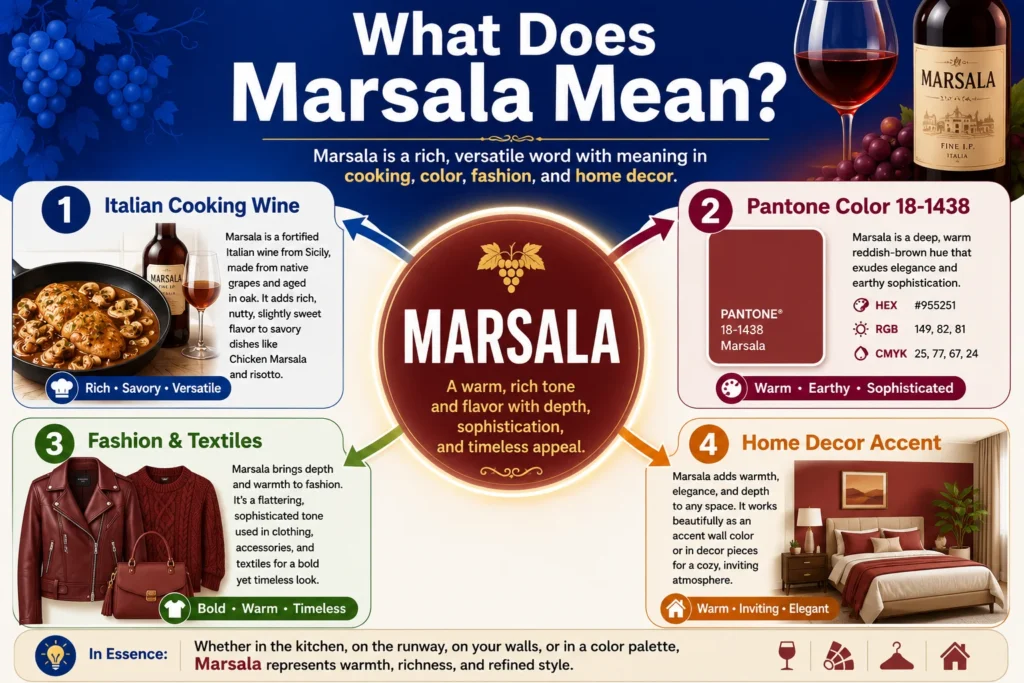
To understand the core marsala meaning, one must look directly at western Sicily. Historically, the word originates from the coastal town of Marsala in Italy. Specifically, Arabic traders originally named the port Marsa Allah, which translates directly to Port of God. Over centuries, the region became famous for producing a distinct fortified wine that captured international trade markets during the eighteenth century.
Furthermore, English merchant John Woodhouse introduced fortified Sicilian wine to global trade routes in 1773. For example, he added neutral grape spirits to local wines so they would survive long ocean voyages. Consequently, the fortified beverage gained immense popularity across Europe and North America. Today, culinary experts categorize the wine into explicit classifications based on sweetness, color, and aging duration.
Moreover, the word expanded beyond the dining table into visual arts and color theory. Indeed, in 2015, the global authority Pantone selected the shade as its Color of the Year. Specifically, Pantone described the color as an earthy wine red that nurtures the mind, body, and soul. Thus, the definition seamlessly bridged the gap between gastronomy and visual design.
Contextual Dynamics & Nuances of the Term
However, the practical usage of the word shifts drastically depending on your immediate environment. For instance, if you stand in a professional kitchen, the term points directly to a crucial reduction sauce. On the other hand, if you enter a boutique clothing shop or an interior design studio, the term describes a deeply muted red hue.
Culinary Context
In gastronomy, cooks rely on fortified wine to create rich, savory pan sauces. Specifically, the alcohol deglazes hot pans, lifting caramelized proteins to create complex flavor bases. For example, classic Chicken Marsala combines pan-seared chicken cutlets, sliced cremini mushrooms, minced garlic, fresh thyme, and reduced fortified wine.
- Secco (Dry): Contains less than 40 grams of residual sugar per liter. Furthermore, chefs use it for savory chicken, veal, and mushroom dishes.
- Semisecco (Semi-Dry): Contains 40 to 100 grams of sugar per liter. In addition, it works excellently for general cooking and cheese pairings.
- Dolce (Sweet): Contains over 100 grams of sugar per liter. Consequently, bakers use it for desserts like Zabaglione and tiramisu.
Fashion and Textile Nuances
Meanwhile, in the fashion world, the shade offers a grounded alternative to bright red or harsh black. For instance, designers utilize wool, leather, and velvet in this hue to project subtle luxury. Furthermore, the tone complements various skin undertones, making it a staple color for autumn and winter apparel collections.
Interior Design and Architecture
Similarly, home decorators leverage the warm tone to create cozy, inviting living spaces. However, using too much dark wine red can make a small room feel constricted. Therefore, interior designers typically balance the shade with light neutrals like cream, warm taupe, or soft sage green.
Real-Life Conversation Examples Using Marsala Meaning Concepts
Indeed, understanding conversational contexts helps you use the term naturally in everyday chat dialogue. Below are five real-life messaging scenarios that show how people use the word across different settings.
1. Planning a Weekend Dinner Party
Alex: Hey Sarah! What are you planning to cook for dinner tonight?
Sarah: I want to make chicken cutlets, but I need to double-check the proper marsala meaning for cooking before buying the wine!
Alex: Make sure you get a dry fortified bottle from the Italian section, not a sweet dessert bottle!
Sarah: Perfect! Consequently, that will complement the cremini mushrooms nicely.
2. Shopping for Living Room Decor
Jordan: I feel like our living room walls look too plain and sterile.
Taylor: Indeed, I agree! Let’s research the aesthetic marsala meaning to see if that deep earthy tone fits our furniture.
Jordan: That sounds brilliant! Furthermore, a rich wine feature wall will look amazing behind our leather sofa.
Taylor: Exactly, because it adds warmth without feeling overly bright.
3. Discussing Fall Fashion Trends
Maya: Look at this autumn trench coat! Is this shade dark burgundy or something else?
Chloe: Actually, the listing says it uses the true marsala meaning hue from the autumn Pantone collection.
Maya: Oh, that explains why it looks so warm and earthy! Therefore, I am ordering it right now.
Chloe: Naturally, it will pair beautifully with your tan boots!
4. Texting About Dessert Recipes
Liam: My tiramisu recipe calls for Sicilian fortified wine, but I only have sweet white wine.
Emma: However, don’t swap it out! The authentic marsala meaning in baking relies on that distinct fortified grape depth.
Liam: Good catch. Consequently, I will run to the store and pick up the correct bottle.
Emma: Trust me, because your Zabaglione cream will taste ten times better!
5. Discussing Wedding Color Themes
Noah: What color palette did you pick for the bridesmaids’ dresses?
Sophia: Meanwhile, we decided on a warm combination of dusty rose, gold, and deep wine red.
Noah: Is that what designers call the marsala meaning aesthetic?
Sophia: Yes! In fact, it anchors the floral arrangements and looks stunning in outdoor evening photos.
Platform-Specific Breakdown
Additionally, online platforms express linguistic trends through distinct visual media and shorthand scripts. Consequently, analyzing how users discuss the topic across platforms reveals how cultural terms spread digitally.
How It Is Used on Snapchat
For instance, Snapchat users lean heavily into quick visual stories, quick text captions, and color filters. Furthermore, younger audiences often use the term when applying warm, vintage video filters or showing off fall outfits.
- Aesthetic Filters: Specifically, users apply warm, desaturated color overlays that enhance red and brownish undertones in selfies.
- Outfit Checks (OOTD): Similarly, snaps highlighting autumn leather jackets, warm boots, or dark lipstick shades often feature the term in text overlays.
- Quick Food Stories: Meanwhile, users post short video clips deglazing pan dishes while captioning their culinary experiments.
The Role of Marsala Meaning on TikTok
On the other hand, TikTok content creators utilize short-form video formats to teach cooking, makeup application, and room renovations. Therefore, videos discussing the marsala meaning trend tend to fall into explicit lifestyle niches.
In fact, creators often pair these videos with trending autumn audio clips. Consequently, viewers search the platform to find exact product shade matches for cosmetics and home paint lines.
- Culinary Tutorials: For example, quick 60-second Chicken Marsala pan-sauce reductions.
- Beauty Trends: Similarly, lip liner and eyeshadow swatches showcasing rich wine shades.
- Interior Makeovers: In addition, before-and-after room painting transformations.
- Moodboard Aesthetics: Finally, aesthetic compilations featuring dark academia themes.
Instagram and Texting Dynamics
Likewise, Instagram serves as the primary digital home for visual aesthetics, mood boards, and food photography. On Instagram, users frequently incorporate hashtags to curate warm, sophisticated content streams.
Similarly, when texting friends, people use the word casually to describe color swatches or specific recipes without needing lengthy descriptions. Furthermore, sending a simple wine emoji alongside the text instantly communicates the intended mood.
Alternative Meanings & NLP Variations of the Phrase
Additionally, search engines use Natural Language Processing (NLP) to connect related words, entities, and geographic references. Therefore, understanding the broader lexical web surrounding the topic helps clarify how AI engines categorize the phrase.
Lexical Entities and Synonyms
To fully grasp the marsala meaning in modern English, consider these primary semantic variations and contextual synonyms:
- Sicilian Fortified Wine: Specifically, refers strictly to the Denominazione di Origine Controllata (DOC) wine produced in western Italy.
- Pantone 18-1438: Namely, the exact industrial color code assigned to the earthy reddish brown shade.
- Earthy Wine-Red: For example, a descriptive color term used in cosmetic and textile marketing.
- Muted Burgundy: Similarly, a common layperson term used when comparing dark wine tones.
- Rust Red: In contrast, a warmer, more orange-leaning red shade that shares visual ground with dark wine tones.
- City of Marsala: Furthermore, the geographic municipality located in the Province of Trapani, Sicily.
Misinterpretations: When NOT to Use Marsala Meaning
Because the term covers multiple domains, people often confuse it with other culinary items or color swatches. However, using the word incorrectly in front of chefs or designers can lead to simple misunderstandings.
1. Confusing Marsala with Masala
However, the most common linguistic error occurs when people confuse Italian Marsala with Indian Masala. Although they sound similar phonetically, they represent completely different culinary worlds. Specifically, Masala refers to a blend of ground spices used in South Asian cuisine (such as Tikka Masala or Garam Masala). Conversely, Marsala refers strictly to Sicilian wine or its associated color.
2. Confusing Fortified Wine with Standard Red Wine
Similarly, cooking enthusiasts often assume any basic red cooking wine can replace Sicilian fortified wine in classic recipes. However, standard cabernet or merlot lacks the oxidized, nutty character created by traditional aging barrels. Consequently, substituting regular wine changes the fundamental flavor profile of the dish.
3. Conflating Pantone Color Profiles
In addition, fashion buyers sometimes label any dark red item as burgundy or maroon. However, true marsala contains noticeable brown and terracotta undertones. On the other hand, maroon leans cooler with blue undertones, while burgundy carries a deeper purple hue.
| Color Name | Primary Undertone | Visual Character |
| Marsala | Brown, Terracotta | Warm, Earthy, Muted |
| Burgundy | Purple, Cool Red | Deep, Regal, Rich |
| Maroon | Dark Blue-Red | Dark, Classic, Neutral |
| Crimson | Bright Neutral Red | Vivid, Energetic, Bold |
How to Respond in Chat Comfortably
Furthermore, when someone mentions this topic in text messages, social media comments, or casual conversation, responding naturally keeps the chat flowing smoothly. Below are tailored guidelines for replying depending on the context.
If Someone Mentions Cooking or Recipes
When a friend texts you about making a pan sauce or buying cooking wine, acknowledge the rich flavor profile and offer a quick practical tip.
- Option 1: “Nice! However, just make sure you get a dry bottle for savory cooking so the sauce isn’t overly sweet!”
- Option 2: “That sounds delicious! For example, are you serving it over pasta or with roasted potatoes?”
- Option 3: “Indeed, chicken cutlets in that reduced sauce taste amazing! Enjoy dinner!”
If Someone Mentions Fashion or Home Painting
If the conversation turns to wardrobe choices or room makeover ideas, focus your reply on color harmony and warm aesthetic pairing.
- Option 1: “I love that color choice! Because that earthy red tone pairs so well with warm cream and wood accents.”
- Option 2: “Selecting that shade makes so much sense for fall outfits since it matches tan leather effortlessly.”
- Option 3: “Your feature wall will look absolutely stunning, bringing instant warmth to the room without feeling harsh.”
FAQs
What is the primary culinary marsala meaning in Italian cooking?
In Italian gastronomy, the primary marsala meaning refers to a protected fortified wine produced in Sicily. Specifically, chefs reduce it with pan juices, butter, herbs, and mushrooms to build rich, savory pan sauces for meat and poultry dishes.
Is marsala a wine or a color?
In fact, the term represents both a fortified Sicilian DOC wine and a rich reddish brown color. Furthermore, Pantone popularized the shade globally in 2015 by naming it their Color of the Year due to its warm, grounding appeal.
What is the exact color composition for this shade?
In standard design systems, the tone consists of approximately 58.4% red, 32.2% green, and 31.8% blue. Consequently, it presents a rich balance of warm brown and deep wine undertones.
Can I substitute Sherry for cooking wine in recipes?
Yes, dry Sherry or dry Madeira wine work as suitable culinary substitutes. Because they share a similar fortified background and nutty oxidation, though authentic Sicilian wine produces the most traditional flavor profile.
What is the difference between marsala and masala?
Specifically, marsala is an Italian fortified wine and a reddish-brown color name. Conversely, masala is a Hindi word describing a complex blend of ground aromatic spices used throughout South Asian cooking.
What does the original Italian word mean historically?
Historically, the word comes from the Sicilian port city of Marsala. Indeed, Arabic traders originally named the coastal city Marsa Allah, which translates directly to Port of God in English.
How do designers use the tone in home decor?
For example, interior designers use the deep wine shade on accent walls, velvet upholstery, leather chairs, and cozy autumn rugs. Furthermore, they pair it with light neutrals like warm ivory, sage green, and brushed brass fixtures.
What skin tones look best in this color?
Because the shade balances warm terracotta and cool wine undertones, it flatters almost all skin tones. In fact, it provides a striking contrast for pale complexions while beautifully complementing golden and dark skin tones.
Is sweet or dry wine better for Chicken Marsala?
Specifically, dry fortified wine (Secco) is always best for savory pan dishes like Chicken Marsala. On the other hand, sweet versions (Dolce) contain high residual sugar levels meant primarily for baking and dessert preparations.
Why did Pantone select this tone as Color of the Year?
Pantone selected the earthy wine red because it embodied warmth, sophistication, and natural grounding. Consequently, the selection panel highlighted its ability to transition seamlessly between fashion, cosmetic products, and interior design.
Conclusion
Ultimately, language continuously shifts as cultural traditions meet digital lifestyle trends. The evolution of the term demonstrates how a centuries-old Italian culinary staple successfully transformed into a modern digital aesthetic tag. Today, whether you encounter the word in a gourmet kitchen, on a fashion runway, or across social media feeds, its core message remains consistent: warmth, depth, and refined Italian elegance.
Additionally, digital platforms like Instagram and TikTok keep classic terminology alive by recontextualizing traditional concepts for newer generations. Therefore, by understanding every shade of the definition, you can effortlessly navigate culinary conversations, fashion choices, and home design projects with total confidence.











3 thoughts on “marsala meaning| The Ultimate Guide and Semantic Meaning”