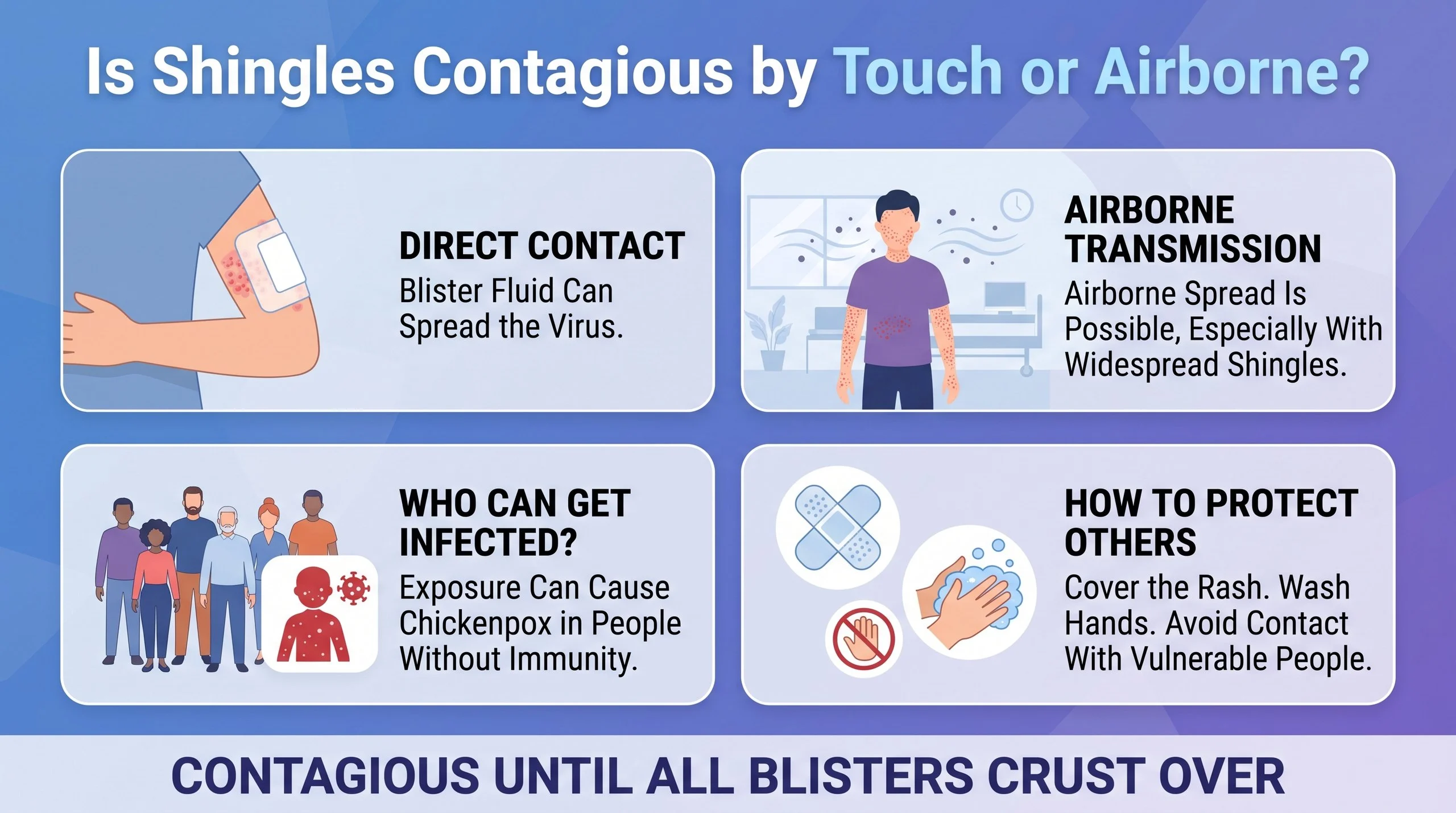
Shingles spreads mainly through direct contact with fluid from active blisters. Airborne transmission can also occur, particularly with widespread shingles. The virus can cause chickenpox in susceptible people, not shingles directly. Contagiousness continues until all blisters have dried and crusted over.
Is shingles contagious by touch or airborne? The answer is both, although direct contact with fluid from shingles blisters is a major route of transmission. The virus responsible for shingles can also spread through the air in certain circumstances, especially when the rash is widespread.
Shingles, also called herpes zoster, develops when the varicella-zoster virus becomes active again in the body. This is the same virus that causes chickenpox. However, someone exposed to a person with shingles does not catch shingles itself. If they lack immunity to the virus, they can develop chickenpox instead.
Understanding how shingles spreads can help you protect your family, coworkers, and other people around you. This guide explains transmission, contagious periods, risk factors, prevention, and what to do after a possible exposure.
How Does Shingles Spread?
| Question | Answer |
|---|---|
| Is shingles contagious by touch? | Yes, contact with blister fluid can spread the virus. |
| Can shingles spread through the air? | Yes, airborne transmission can occur, particularly with widespread shingles. |
| Can you catch shingles from someone? | No. Exposure can cause chickenpox in someone without immunity. |
| When is shingles contagious? | From the appearance of the rash until all blisters crust over. |
| Does covering the rash help? | Yes, covering the lesions reduces the risk of transmission. |
These answers reflect guidance from the Centers for Disease Control and Prevention (CDC).
Is Shingles Contagious Through Touch?
Yes. Shingles can spread through direct contact with fluid inside active blisters.
The blisters contain the varicella-zoster virus. If someone who lacks immunity touches this fluid, the virus can enter their body and cause chickenpox.
For example, transmission may occur if someone touches an uncovered shingles blister and then handles the area around their mouth or eyes without washing their hands. Direct contact with the blister fluid is the main concern.
However, touching a person does not automatically cause infection. The level of risk depends on the exposure, whether the rash is covered, and whether the exposed person has immunity.
Can You Get Shingles From Touching the Rash?
You cannot catch shingles itself from another person. Nevertheless, touching active blisters can expose you to the virus that causes chickenpox.
If you have never had chickenpox and have not received the chickenpox vaccine, you may be susceptible to infection.
Therefore, avoid touching the rash, blister fluid, or dressings that have come into contact with the lesions. Wash your hands thoroughly if accidental contact occurs.
Can Shingles Spread Through the Air?
Yes. Airborne transmission of the varicella-zoster virus can occur, including when virus particles from blister fluid become suspended in the air.
The risk depends partly on the type of shingles.
Localized Shingles
Localized shingles usually affects a limited area of the body, often in a stripe on one side. In otherwise healthy people, the rash can often be covered completely.
When all lesions are covered, the risk of transmission is lower. Direct contact with blister fluid remains an important concern.
Disseminated Shingles
Disseminated shingles involves a more widespread rash, sometimes extending beyond the original area. It can pose a greater transmission risk, including through airborne particles.
People with disseminated shingles may need special infection-control precautions. Healthcare professionals should assess the situation, especially when vulnerable people are nearby.
The CDC recommends airborne and contact precautions in healthcare settings for disseminated shingles and certain cases of localized shingles.
Can You Catch Shingles by Being in the Same Room?
The answer depends on the circumstances.
Simply being near someone with localized shingles does not automatically mean you will become infected. If the rash is localized and fully covered, the transmission risk is generally lower.
However, being in the same room can be more concerning when the person has disseminated shingles or when lesions are uncovered and appropriate precautions are not followed.
Your immunity also matters. People who have had chickenpox or received the chickenpox vaccine generally have protection against primary infection, although vaccination and prior infection do not eliminate every possible risk.
If you are unsure whether your exposure was significant, contact a healthcare professional for advice.
Can Shingles Spread Before Blisters Appear?
Shingles is generally considered contagious once the rash appears and remains contagious until all lesions have dried and crusted over.
Pain, tingling, itching, or burning may occur before the rash develops. However, the person is not considered contagious from shingles before the blisters appear.
Similarly, the person is no longer considered infectious from the shingles rash once all lesions have crusted over.
Nevertheless, a person with chickenpox can spread the virus before the rash appears. That is a different stage of infection and should not be confused with shingles transmission.
How Long Is Shingles Contagious?
Shingles remains contagious from the appearance of the rash until all blisters have dried and crusted over.
The timeline varies from person to person. Shingles blisters commonly crust over within about 7–10 days, although the rash may take 2–4 weeks to clear completely.
Importantly, the skin may remain discolored or sensitive after the person stops being contagious. These lingering changes do not necessarily mean the virus is still spreading.
Do not rely on a fixed number of days alone. Instead, look at whether every blister has crusted over, and follow medical advice if the rash is widespread or the person has a weakened immune system.
Can Shingles Spread Through Clothing, Bedding, or Towels?
The main concern is contact with infectious fluid from active blisters. Clothing, towels, or bedding that have direct contact with uncovered, fluid-filled lesions may become contaminated.
However, ordinary contact with someone’s clothing or belongings does not automatically lead to infection.
To reduce risk:
- Keep the rash covered with a clean, dry dressing when possible.
- Avoid sharing towels or clothing that touch the rash.
- Handle used dressings carefully.
- Wash your hands after providing care.
- Follow healthcare advice for cleaning and handling contaminated items.
These measures are especially important when someone in the household is pregnant and lacks immunity, has a weakened immune system, or is a newborn.
Who Is Most at Risk From Shingles Exposure?
People who lack immunity to the varicella-zoster virus can develop chickenpox after exposure. Some groups also face a higher risk of severe complications from chickenpox.
These include:
Pregnant People Without Immunity
Chickenpox during pregnancy can cause serious complications for the pregnant person and the developing baby. Anyone who is pregnant and may have been exposed should contact a healthcare professional promptly.
Newborns and Premature Infants
Newborns, particularly certain infants born prematurely or with low birth weight, may be vulnerable to serious infection. Avoid direct contact between these infants and active shingles lesions.
People With Weakened Immune Systems
People receiving chemotherapy, taking certain immune-suppressing medicines, or living with conditions that weaken immunity may face a greater risk of severe infection.
If someone in one of these groups has had a possible exposure, seek prompt medical advice rather than waiting for symptoms.
How to Prevent Shingles From Spreading
Fortunately, several practical steps can reduce the risk of transmission.
1. Cover the Rash
Use a clean, dry dressing to cover the lesions when possible. This helps prevent other people from contacting blister fluid.
2. Avoid Touching or Scratching Blisters
Touching the rash can transfer infectious fluid to your hands. Avoid scratching, picking, or squeezing the blisters.
3. Wash Your Hands Regularly
Wash your hands with soap and water, especially after changing a dressing or caring for the affected skin.
4. Avoid Close Contact With Vulnerable People
Until all blisters have crusted over, avoid contact with pregnant people who lack immunity, newborns, and people with weakened immune systems.
5. Follow Medical Advice
If the rash is widespread, cannot be covered, or affects someone with a weakened immune system, additional precautions may be needed.
These measures help limit exposure while the rash is infectious.
What Should You Do After Exposure to Shingles?
If you touched an active shingles blister or were exposed to someone with potentially contagious shingles, do not panic. Exposure does not guarantee infection.
First, wash your hands if you touched the rash or blister fluid. Next, consider whether you have had chickenpox or received the chickenpox vaccine.
If you are pregnant, immunocompromised, or caring for a newborn who may have been exposed, contact a healthcare professional promptly. They can assess your immunity and determine whether preventive treatment is appropriate.
For other people, a clinician can help assess the exposure and explain what symptoms to watch for. Chickenpox symptoms often develop 10–21 days after exposure.
Do not wait for a rash to appear before seeking advice if you belong to a high-risk group.
Can Someone With Shingles Go to Work or School?
It depends on the rash, the person’s health, and their workplace or school requirements.
Someone with localized shingles may be able to attend work if every lesion can be completely covered and they feel well enough. However, they should avoid direct care of people at high risk for severe chickenpox when feasible.
People with disseminated shingles, or those whose rash cannot be covered, may need to stay away from work or school until all lesions have dried and crusted over. Healthcare facilities may have stricter infection-control rules.
Therefore, check local policies and seek medical guidance, particularly if the person works with patients, newborns, or people with weakened immune systems.
Is Shingles the Same as Chickenpox?
No. Shingles and chickenpox are caused by the same virus, but they are different conditions.
Chickenpox is the initial infection with the varicella-zoster virus. After recovery, the virus remains inactive in nerve tissue. Years later, it can reactivate and cause shingles.
Shingles usually produces a painful rash in a limited area on one side of the body or face. Chickenpox typically causes a more widespread itchy rash.
Consequently, someone exposed to shingles may develop chickenpox if they are not immune. They do not catch shingles directly from the infected person.
When Should You Contact a Doctor?
Seek medical advice promptly if you suspect you have shingles. Antiviral medicines can shorten the illness and work best when started early, particularly soon after the rash appears.
Contact a healthcare professional urgently if the rash is near your eye, involves your face, is widespread, or occurs in someone with a weakened immune system. Eye involvement can threaten vision.
You should also seek prompt advice after a possible exposure if you are pregnant and not immune, have a weakened immune system, or are concerned about a newborn.
Do not rely on appearance alone to diagnose a rash. A healthcare professional can assess your symptoms and recommend suitable treatment.
Frequently Asked Questions
1. Is shingles contagious by touch or airborne?
Shingles can spread through direct contact with fluid from active blisters, and airborne transmission can occur. The risk is generally lower when localized lesions are fully covered. Widespread shingles may require stricter precautions.
2. Can you catch shingles by touching someone?
You cannot catch shingles itself from another person. However, touching fluid from active shingles blisters can transmit the varicella-zoster virus to someone without immunity, potentially causing chickenpox.
3. Can shingles spread through the air in a room?
Airborne transmission is possible, particularly with disseminated shingles. The risk from localized, fully covered shingles is generally lower. People with weakened immunity should seek medical guidance about potential exposure.
4. When is shingles no longer contagious?
Shingles is no longer considered infectious once all blisters have dried and crusted over. This often takes around 7–10 days, although the rash may take longer to heal completely.
5. Can you get chickenpox from someone with shingles?
Yes. Someone who has never had chickenpox and has not received the chickenpox vaccine can develop chickenpox after exposure to the virus from active shingles lesions. The exposure does not directly give them shingles.
6. Can shingles spread through clothing or bedding?
Transmission is mainly associated with infectious blister fluid. Items that directly contact uncovered, fluid-filled lesions may become contaminated. Avoid sharing towels or clothing that touch the rash, and wash your hands after handling used dressings.
7. Can I visit someone with shingles?
The risk depends on whether the rash is localized, whether it is covered, and your immunity. Avoid direct contact with the lesions. If you are pregnant and nonimmune, immunocompromised, or visiting a newborn, seek medical advice before visiting.
8. What should I do if I have been exposed to shingles?
Wash your hands if you touched the rash or blister fluid, and assess whether you have immunity to chickenpox. If you are pregnant, immunocompromised, or concerned about a newborn, contact a healthcare professional promptly.
Conclusion
Shingles can spread through direct contact with blister fluid, and airborne transmission is also possible, particularly when the rash is widespread. However, exposure does not give someone shingles directly. A person without immunity to the varicella-zoster virus may develop chickenpox instead. To reduce transmission, keep the rash covered, avoid touching the blisters, and wash your hands regularly. Also, protect pregnant people without immunity, newborns, and people with weakened immune systems until all lesions have crusted over. If you suspect shingles or have a high-risk exposure, seek prompt medical advice.