Portland OR weather changes throughout the year, with mild, rainy winters, cool spring mornings, warm and relatively dry summers, and colorful autumn days. Located in the Pacific Northwest, Portland, Oregon, is known for frequent winter showers, cloudy skies, and comfortable summer weather. However, temperatures and rainfall can vary significantly by season.
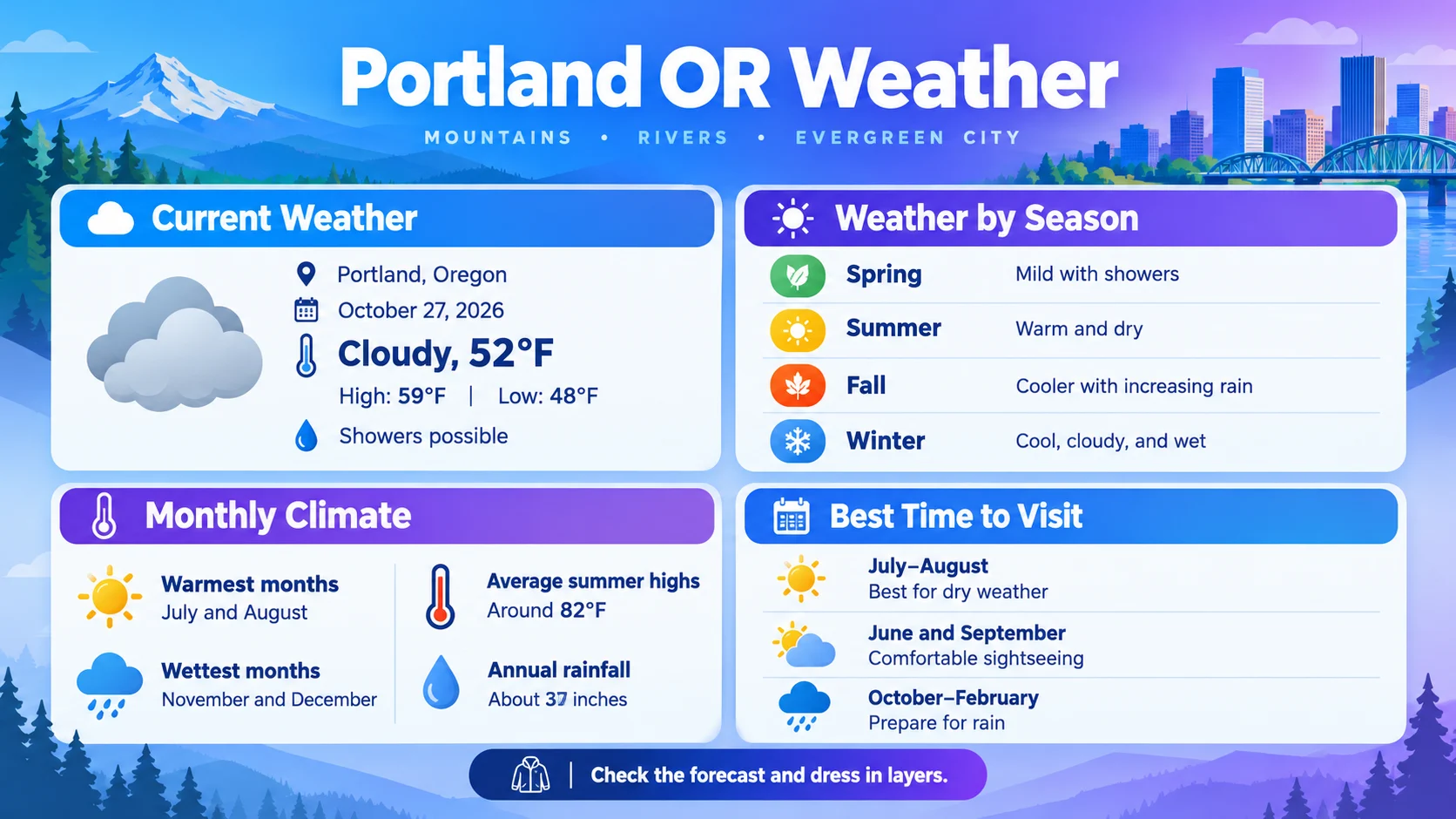
As of October 27, 2026, Portland is experiencing cloudy conditions with a temperature of 52°F (11°C). Today’s forecast calls for mostly cloudy skies, a chance of showers, and a high near 59°F. Meanwhile, the coming days are expected to remain cool, with additional showers before conditions gradually become drier in early November.
Whether you’re planning a visit, checking the daily forecast, or learning about the local climate, this guide covers Portland’s current weather, seven-day outlook, monthly temperatures, rainfall, seasonal conditions, and the best time to visit.
Portland OR 7-Day Weather Forecast
The forecast from October 27 through November 2, 2026, shows several cool, cloudy days with varying chances of rain. However, the outlook suggests drier conditions toward the end of the week and into early November.
| Date | Expected Conditions | High | Low |
|---|---|---|---|
| Tue, Oct 27 | Mostly cloudy, showers possible | 59°F | 48°F |
| Wed, Oct 28 | Cloudy with showers | 57°F | 44°F |
| Thu, Oct 29 | Mostly cloudy, occasional showers | 56°F | 43°F |
| Fri, Oct 30 | Mostly cloudy, limited shower chances | 57°F | 38°F |
| Sat, Oct 31 | Variable clouds, passing shower possible | 54°F | 41°F |
| Sun, Nov 1 | Mainly cloudy | 55°F | 41°F |
| Mon, Nov 2 | Clouds and some sunshine | 57°F | 44°F |
Temperatures are forecast to remain in the mid-to-upper 50s during the day. Meanwhile, overnight lows may fall into the upper 30s or low 40s.
For that reason, dress in layers if you’re spending time outdoors. Also, check the latest forecast before driving or planning outdoor events, particularly on days with a higher chance of showers.
Portland Oregon Weather by Month
Portland has distinct seasonal weather patterns. According to 1991–2020 climate normals for Portland International Airport, average summer highs reach the low 80s, while winter highs generally remain in the upper 40s.
The following table summarizes typical monthly conditions. These are long-term averages, not predictions for a particular day.
| Month | Average High | Average Low | Average Rainfall |
|---|---|---|---|
| January | 47.5°F | 36.2°F | 5.03 in |
| February | 51.5°F | 36.8°F | 3.68 in |
| March | 56.8°F | 39.7°F | 3.97 in |
| April | 62.0°F | 43.7°F | 2.89 in |
| May | 69.3°F | 49.4°F | 2.51 in |
| June | 74.3°F | 54.1°F | 1.63 in |
| July | 81.9°F | 58.5°F | 0.51 in |
| August | 82.3°F | 58.9°F | 0.54 in |
| September | 76.7°F | 54.1°F | 1.52 in |
| October | 64.4°F | 46.7°F | 3.42 in |
| November | 53.5°F | 40.6°F | 5.45 in |
| December | 46.9°F | 36.2°F | 5.77 in |
Overall, July and August are the warmest and driest months. In contrast, November through January tends to bring more rainfall and colder nights.
These figures also explain why Portland’s weather feels different across the year. Summer is often comfortable for sightseeing, while winter favors indoor attractions and activities that don’t depend on dry conditions.
Portland OR Weather in Spring
Spring in Portland runs from March through May. During this period, temperatures gradually rise, flowers bloom, and the landscape becomes increasingly green.
March Weather
March brings average highs near 57°F and lows around 40°F. Rain showers remain common, although sunny intervals become more noticeable as the season progresses.
April Weather
April usually brings daytime temperatures near 62°F. Gardens, parks, and nearby natural areas become more colorful, but rain can still interrupt outdoor plans.
May Weather
May is milder, with average highs around 69°F. As a result, it’s a popular month for walking, sightseeing, and exploring Portland’s outdoor attractions.
What to wear in spring: Bring layers, a light waterproof jacket, and comfortable walking shoes. Although some afternoons feel warm, mornings and evenings can remain cool.
Portland OR Weather in Summer
Summer is generally Portland’s warmest and driest season. July and August typically feature daytime highs around 82°F, relatively low rainfall, and long daylight hours.
These conditions make summer ideal for outdoor dining, parks, cycling, hiking, and day trips. In addition, the lower chance of rain makes it easier to plan activities in advance.
However, summer weather is not always mild. Heat waves can push temperatures much higher than normal, and wildfire smoke can occasionally affect air quality across the Pacific Northwest.
July Weather
July is typically warm and dry, with an average high near 82°F. Rainfall averages only about half an inch, making it one of the best months for outdoor activities.
August Weather
August is similarly warm, with average highs around 82°F. Nevertheless, visitors should prepare for occasional hot spells and check air quality during regional wildfire events.
What to wear in summer: Lightweight clothing, comfortable walking shoes, sunglasses, and sunscreen are usually suitable. Also, carry water during hot weather and check local advisories when temperatures rise.
Portland OR Weather in Fall
Fall brings cooler air, changing leaves, and a gradual return of rainy weather. September often feels like an extension of summer, while October and November become progressively wetter.
September Weather
September usually has average highs near 77°F. Rainfall increases compared with July and August, but many days remain comfortable for exploring the city.
October Weather
October brings average highs around 64°F and lows near 47°F. Showers become more frequent, so visitors should prepare for changing conditions throughout the day.
November Weather
November is cooler and wetter, with average highs around 54°F. In addition, shorter daylight hours and frequent cloudy skies become more noticeable.
Fall is a good time to enjoy seasonal colors and quieter attractions. However, a flexible itinerary helps because rain can affect outdoor plans.
What to wear in fall: Choose layers, a waterproof jacket, and shoes that handle wet sidewalks. A warmer coat can also help on chilly mornings and evenings.
Portland OR Weather in Winter
Winter in Portland is typically cool, cloudy, and rainy rather than consistently snowy. December, January, and February bring some of the year’s highest rainfall totals.
Average daytime highs generally range from the upper 40s to low 50s. Meanwhile, nighttime temperatures often fall into the mid-to-upper 30s.
Snow sometimes falls in Portland, but significant accumulation is not guaranteed every winter. When snow or freezing rain occurs, roads can become hazardous, and travel may be disrupted.
December Weather
December is usually one of Portland’s wettest months, with an average high near 47°F. Short days and frequent showers are common.
January Weather
January has average highs around 48°F and lows near 36°F. Cold rain, cloudy skies, and occasional frost can affect daily conditions.
February Weather
February gradually becomes milder, with average highs near 52°F. Even so, showers remain common, and winter conditions can continue into early spring.
What to wear in winter: A waterproof coat, warm layers, and water-resistant shoes are useful. If freezing conditions are forecast, check road conditions before traveling.
Does It Rain a Lot in Portland, Oregon?
Yes, Portland experiences frequent rainfall, particularly from autumn through winter. However, the city is not usually known for constant heavy downpours.
Instead, rain often arrives as light showers, drizzle, or periods of steady precipitation. According to long-term climate normals, Portland receives roughly 37 inches of rain annually, spread across about 157 days with measurable precipitation.
November and December are among the wettest months. By comparison, July and August are much drier, often receiving around half an inch of rain per month.
Therefore, the time of year matters when planning a visit. If you prefer dry weather, summer is generally the safest choice. Otherwise, a waterproof jacket can make Portland enjoyable even during the rainy season.
Does It Snow in Portland, Oregon?
Yes, snow occasionally falls in Portland, but it is much less predictable than rain.
Winter temperatures sometimes drop enough for snow or freezing rain, particularly during cold weather outbreaks. However, many winter days remain above freezing, so precipitation falls as rain instead.
Snowfall varies considerably from year to year. Some winters bring little or no measurable snow, while other winters produce disruptive snow and ice events.
If snow is in the forecast, check local weather alerts and road conditions before traveling. In particular, freezing rain can create slippery roads and sidewalks even when snowfall is limited.
Best Time to Visit Portland for Good Weather
The best time to visit Portland depends on your preferences, budget, and planned activities. Generally, late spring through early fall offers the most comfortable conditions for outdoor exploration.
| Travel Goal | Best Time | Why |
|---|---|---|
| Warm, dry weather | July–August | Warm days and low rainfall |
| Comfortable sightseeing | June or September | Mild temperatures and generally pleasant conditions |
| Spring gardens | April–May | Blooming flowers and greener landscapes |
| Fall colors | October | Autumn foliage and cooler weather |
| Lower-season travel | November–February | Often fewer visitors, but wetter weather |
For many visitors, June and September offer a good balance between comfortable temperatures and outdoor activities. July and August are better choices if dry weather is the main priority.
On the other hand, winter can still suit travelers who enjoy museums, restaurants, coffee shops, and indoor attractions. Just allow extra time for rain and changing conditions.
How Portland Weather Affects Daily Life
Portland’s climate influences transportation, outdoor activities, and everyday routines.
During the rainy season, people often carry waterproof jackets and plan flexible routes. Wet roads can also affect driving conditions, particularly during darker mornings and evenings.
In summer, dry weather encourages residents and visitors to spend more time in parks, gardens, and outdoor dining areas. However, occasional heat waves can increase the need for shade, hydration, and air-conditioned spaces.
Seasonal changes also affect nearby outdoor destinations. Mountain areas may experience snow and colder conditions even when Portland itself has rain. Therefore, check the forecast for your exact destination before heading outside the city.
Frequently Asked Questions
What is the weather in Portland, Oregon, today?
On October 27, 2026, Portland is cloudy with a temperature around 52°F. The forecast calls for mostly cloudy skies, a high near 59°F, and a chance of showers during the day and evening.
What is the Portland OR weather forecast for the next seven days?
The forecast from October 27 through November 2 shows highs between 54°F and 59°F. Showers are more likely early in the period, while Sunday and Monday are expected to be mainly cloudy with lower rain chances.
What is the best month to visit Portland, Oregon?
July and August are generally best for warm, dry weather. However, June and September also offer comfortable temperatures and can be attractive alternatives for travelers who want to explore the city outdoors.
What is the coldest month in Portland?
January is typically among Portland’s coldest months, with average highs around 48°F and lows near 36°F. Winter nights can occasionally become colder, especially during periods of frost or freezing weather.
What is the hottest month in Portland, Oregon?
August is typically Portland’s warmest month, with an average high around 82°F. Nevertheless, occasional heat waves can bring much higher temperatures, so visitors should check forecasts during summer.
How much rain does Portland get each year?
Portland receives approximately 37 inches of rainfall annually based on long-term climate normals. Rainfall is concentrated in the cooler months, while July and August are generally much drier.
Does Portland get snow every winter?
No. Snowfall varies from year to year, and some winters bring little or no measurable snow. When snow or freezing rain does occur, however, it can disrupt road travel and public transportation.
Is Portland, Oregon, rainy all year?
No. Portland has a distinct wet season and dry season. Autumn and winter bring frequent showers, while July and August are usually much drier. Spring and early fall offer a transition between these patterns.
Conclusion
Portland OR weather changes considerably throughout the year, from cool, rainy winters to warm, dry summers. October through winter typically brings frequent showers, while July and August offer the best chances for sunshine and outdoor activities. Spring and September provide a comfortable balance of mild temperatures and seasonal beauty. As of October 27, 2026, Portland is cloudy at around 52°F, with showers possible and daytime temperatures near 59°F. Before heading out, check the latest forecast, prepare for changing conditions, and dress in layers. With the right planning, you can enjoy Portland in every season.

Andrew Morris is a writer at Meaninga.com who specializes in word meanings, slang, idioms and modern language trends. He creates clear, accurate and easy to understand content for everyday readers.