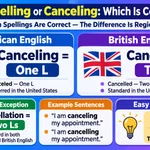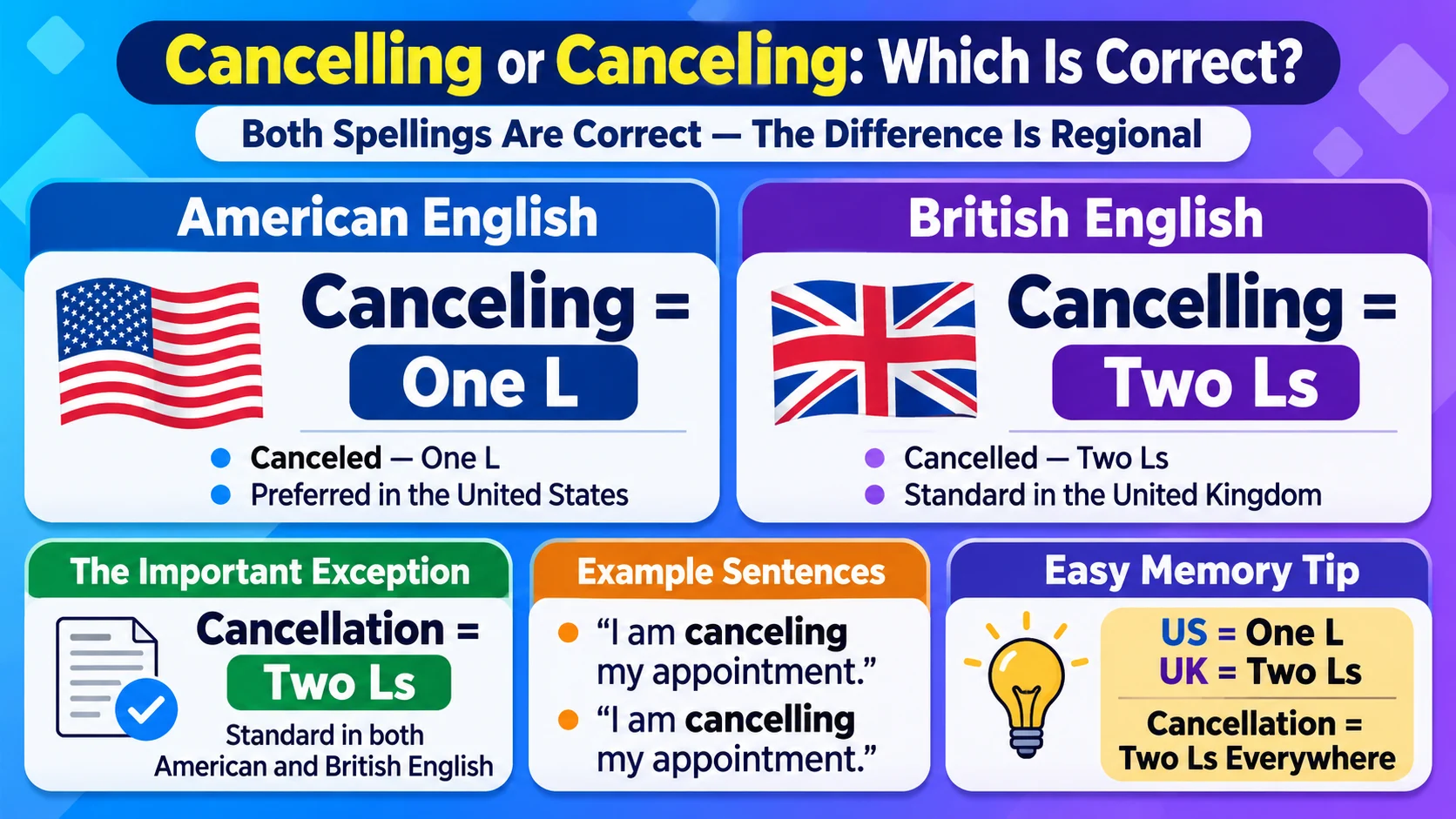
Cancelling or canceling? Both spellings are correct, but the preferred form depends on the type of English you use. In American English, canceling with one L is more common. However, British English generally uses cancelling with two Ls. Both words have the same meaning and pronunciation. Therefore, your audience determines which spelling you should choose.
The spelling difference between cancelling and canceling often confuses writers, students, and English learners. Although the two words look different, they have exactly the same meaning. The only difference is regional spelling.
In the United States, writers usually drop the second L and write canceling. By contrast, British English keeps the double L, making cancelling the standard choice. Similarly, this spelling pattern appears in related words such as canceled and cancelled.
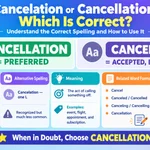
However, there is one important detail to remember: cancellation keeps two Ls in both American and British English. So, even if you write canceling, you should still write cancellation.
This guide explains both spellings, their grammar rules, common examples, and related word forms. In addition, you will learn how to choose the right version for your audience and avoid common spelling mistakes.
Cancelling vs. Canceling
Both spellings are correct. However, their regional preferences differ.
| Spelling | English Variety | Usage |
|---|---|---|
| Canceling | American English | Preferred spelling |
| Cancelling | British English | Standard spelling |
| Canceled | American English | Preferred past tense |
| Cancelled | British English | Standard past tense |
| Cancellation | Both | Standard noun spelling |
For example, an American writer might say, “I am canceling my subscription.” Meanwhile, a British writer would usually write, “I am cancelling my subscription.”
Both sentences are grammatically correct. Therefore, choose the spelling that matches your audience and use it consistently.
What Does Canceling or Cancelling Mean?
Both canceling and cancelling are forms of the verb cancel. They describe the action of stopping something that was previously planned, arranged, or scheduled.
For example, you might cancel a meeting, a flight, an appointment, or a subscription. Similarly, a company may cancel an order when it cannot fulfill the request.
The meaning never changes between the two spellings. Instead, the difference comes from American and British spelling conventions.
Consider these examples:
- “I am canceling my doctor’s appointment.”
- “I am cancelling my doctor’s appointment.”
- “The company is canceling the event.”
- “The company is cancelling the event.”
All four sentences are correct. However, American writers generally prefer the single-L version, while British writers usually choose the double-L version.
When to Use Canceling in American English
Canceling with one L is the preferred spelling in American English. Therefore, use it when writing for readers in the United States.
American English generally avoids doubling the final L when adding certain suffixes to words such as cancel. As a result, the spelling keeps one L in forms such as canceling and canceled.
Here are some examples:
- “I am canceling my gym membership.”
- “She is canceling the dinner reservation.”
- “We are canceling tomorrow’s meeting.”
- “The airline is canceling several flights.”
- “He is canceling his online subscription.”
Notice that each example uses one L. Similarly, American English commonly uses canceled for the past tense.
For SEO articles, business emails, school assignments, and other US-focused content, canceling is the safest choice. More importantly, keep the same spelling throughout the entire document.
When to Use Cancelling in British English
Cancelling with two Ls is the standard spelling in British English. Writers in the United Kingdom generally use this form in everyday communication and formal documents.
Unlike the common American convention, British English usually doubles the final L when adding endings such as -ing and -ed to cancel.
For example:
- “I am cancelling my appointment.”
- “They are cancelling the concert.”
- “She is cancelling her membership.”
- “We are cancelling our travel plans.”
- “The school is cancelling today’s activities.”
These sentences follow British spelling conventions. Likewise, British English uses cancelled for the past tense.
You may also see the double-L spelling in writing from Australia, Ireland, and other English-speaking regions. However, regional preferences can vary, so follow the style guide used by your publication or organization.
Why Do Canceling and Cancelling Have Different Spellings?
The difference comes from the spelling traditions of American and British English. Over time, the two varieties developed different preferences for doubling the final L in certain words.
American spelling often favors a simplified form. Consequently, it usually keeps one L in canceling and canceled.
British spelling, on the other hand, generally retains the double L. Therefore, British writers use cancelling and cancelled.
This pattern also appears in other English words.
| American English | British English |
|---|---|
| Canceling | Cancelling |
| Canceled | Cancelled |
| Traveling | Travelling |
| Traveled | Travelled |
| Labeling | Labelling |
| Labeled | Labelled |
| Modeling | Modelling |
| Modeled | Modelled |
The differences do not change pronunciation or meaning. Instead, they reflect the spelling conventions used in each region.
What Is the Difference Between Canceling and Cancellation?
Although canceling and cancellation come from the same verb, they perform different grammatical jobs.
Canceling is the -ing form of the verb cancel. It describes an action that is happening or can function as a gerund.
Cancellation, meanwhile, is a noun. It refers to the act or result of canceling something.
For example:
- “I am canceling my flight.”
- “The cancellation of my flight caused a problem.”
The first sentence describes an action. In contrast, the second sentence names the event or result.
One important spelling rule applies here: cancellation uses two Ls in both American and British English.
| Word | Part of Speech | Meaning |
|---|---|---|
| Cancel | Verb | To stop a planned activity |
| Canceling | Verb form or gerund | The act of stopping something |
| Cancelling | British verb form or gerund | The same action |
| Cancellation | Noun | The act or result of canceling |
| Canceled | American past tense | Stopped or called off |
| Cancelled | British past tense | Stopped or called off |
Therefore, remember that American English uses canceling but still uses cancellation.
How to Use Canceling and Cancelling in Sentences
The best way to understand these spellings is to see them in everyday situations. The following examples show how both forms work in different contexts.
Everyday Examples
- “I am canceling my plans because I feel sick.”
- “She is cancelling her weekend trip.”
- “They are canceling the family dinner.”
- “We are cancelling our hotel reservation.”
- “He is canceling his streaming subscription.”
Each sentence uses the same verb form. However, the spelling follows a different regional convention.
Business and Professional Examples
- “The manager is canceling the scheduled meeting.”
- “The company is cancelling its product launch.”
- “Our office is canceling today’s training session.”
- “The client is cancelling the service agreement.”
- “The airline is cancelling the remaining flights.”
In professional writing, consistency matters just as much as correctness. Therefore, follow your organization’s preferred English style.
School and Academic Examples
- “The school is canceling classes because of severe weather.”
- “The university is cancelling the scheduled examination.”
- “The teacher is canceling the afternoon lesson.”
- “Students received a notice about the cancellation.”
These examples also show why the noun cancellation needs special attention. Even when the verb follows a regional spelling rule, the noun generally keeps two Ls.
Canceling vs. Cancelling: Common Grammar Mistakes
Both spellings are accepted, but writers sometimes mix them or confuse them with related words. Fortunately, a few simple rules can prevent these mistakes.
Mixing American and British Spellings
Using different regional forms in the same document can make your writing look inconsistent.
For example:
Inconsistent: “We are canceling the event because the previous booking was cancelled.”
Consistent American English: “We are canceling the event because the previous booking was canceled.”
Consistent British English: “We are cancelling the event because the previous booking was cancelled.”
Therefore, choose one regional style before you begin writing.
Writing Cancelation Instead of Cancellation
The spelling cancelation with one L does appear occasionally. However, cancellation with two Ls is the standard and widely preferred form in both American and British English.
For example:
- Correct: “The cancellation surprised everyone.”
- Avoid: “The cancelation surprised everyone.”
Although you may encounter the single-L version, cancellation is the safer choice.
Assuming Cancelling Is Incorrect in American English
Some writers believe that cancelling is always wrong in the United States. However, that is not true.
The single-L spelling canceling is preferred in American English, but the double-L form is also recognized and used. Nevertheless, American writers should generally choose canceling for consistency with standard US usage.
Confusing the Verb and Noun Forms
Canceling describes an action, while cancellation names the event or result.
For example, “I am canceling my order” describes what someone is doing. Meanwhile, “The cancellation was unexpected” describes what happened.
Understanding this difference makes it easier to choose the right word.
Canceling or Cancelling: Which Should You Use for SEO?
If you create content for a US audience, use canceling as your primary spelling. It is the more common American form and matches standard US editorial preferences.
However, you can still mention cancelling naturally in your article. This helps readers who search using British spelling and makes your explanation more complete.
For example, an article targeting the keyword “cancelling or canceling” can explain both forms in its title and introduction. Meanwhile, its examples and main explanations can use American spelling consistently.
Consider these practical recommendations:
- Use canceling for US-focused articles.
- Use cancelling for UK-focused articles.
- Keep cancellation with two Ls in both varieties.
- Avoid switching between regional spellings without a reason.
- Follow your publisher’s style guide when one exists.
Ultimately, search engines can understand both spelling variations. Nevertheless, matching your audience’s preferred spelling improves readability and builds trust.
Easy Trick to Remember the Correct Spelling
A simple way to remember the difference is to connect the number of Ls with the regional spelling.
American English = One L
- Canceling
- Canceled
British English = Two Ls
- Cancelling
- Cancelled
However, keep one exception in mind:
Cancellation = Two Ls in both varieties.
You can remember it with this short phrase:
“One L for American canceling, two Ls for British cancelling, and two Ls for cancellation everywhere.”
This quick rule makes the spelling easier to remember. In addition, it helps you avoid common mistakes when writing related forms.
Frequently Asked Questions
Is cancelling or canceling correct?
Both spellings are correct. However, canceling with one L is preferred in American English, while cancelling with two Ls is standard in British English. Both forms have the same meaning and pronunciation.
Is cancelling British or American English?
Cancelling with two Ls is the standard British English spelling. Meanwhile, American English generally prefers canceling with one L. The difference follows regional spelling conventions rather than a change in meaning.
Is canceling correct in American English?
Yes. Canceling is the preferred spelling in American English. Although some American writers also use cancelling, the single-L form is more common in US publications, professional writing, and everyday communication.
Why does cancellation have two Ls?
Cancellation is the standard noun form in both American and British English. Unlike canceling and cancelling, it keeps two Ls regardless of regional spelling preferences. Therefore, write cancellation rather than cancelation in most situations.
Is cancelled also correct in the United States?
Yes. Cancelled with two Ls is recognized in American English, although canceled with one L is the preferred US spelling. Both versions describe the same action, so consistency matters most.
What is the past tense of cancel?
The past tense is canceled in preferred American English and cancelled in British English. Both forms are correct. For example, an American writer might say, “I canceled my appointment.”
What is the difference between canceling and cancellation?
Canceling is a verb form that describes the action of stopping something. In contrast, cancellation is a noun that describes the act or result. For example, “I am canceling my order” describes an action.
Should I use canceling or cancelling in a US article?
For a US audience, choose canceling with one L. It is the preferred American spelling and fits standard US editorial conventions. However, you can mention cancelling when explaining the British spelling difference.
Conclusion
Choosing between cancelling and canceling is easier than it looks. Both spellings are correct, but American English generally prefers canceling with one L, while British English uses cancelling with two Ls. Therefore, match your spelling to your intended audience and remain consistent throughout your writing. Remember, cancellation always takes two Ls in standard American and British usage. Although regional spelling differences can seem confusing, this simple rule makes the choice clear. For US-focused articles, emails, and assignments, use canceling. Ultimately, the right spelling depends on your readers, not a difference in meaning.

Andrew Morris is a writer at Meaninga.com who specializes in word meanings, slang, idioms and modern language trends. He creates clear, accurate and easy to understand content for everyday readers.