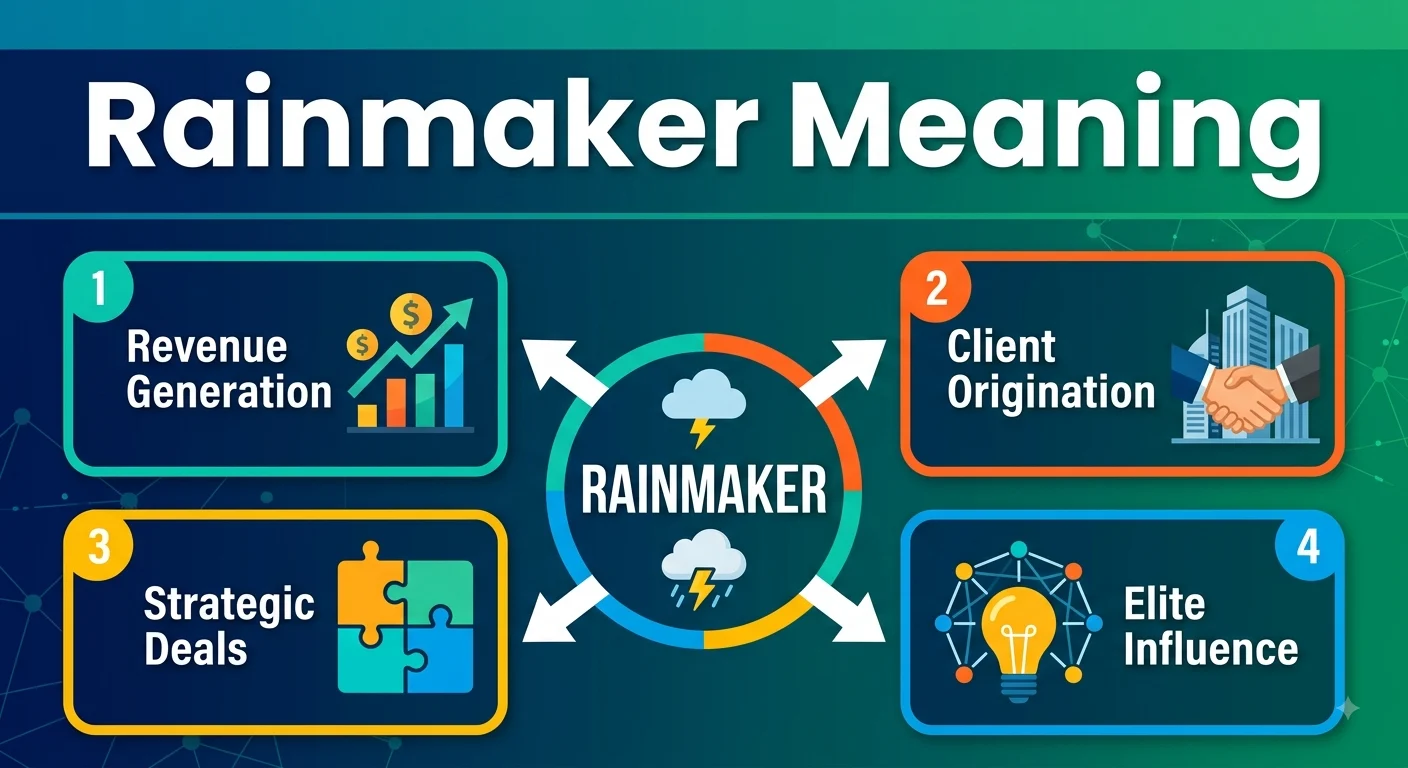
A rainmaker refers to a key individual within a company, law firm, or financial institution who consistently generates a significant amount of revenue, brings in high-value new clients, or secures major business deals. Originally derived from Indigenous American weather traditions, the term today symbolizes exceptional business acumen, networking power, and pivotal leadership.
Understanding the complete rainmaker meaning helps you navigate corporate hierarchies, legal partner tracks, sales strategies, and modern executive leadership. Furthermore, this dynamic term carries a compelling cultural legacy that transitions from historical weather rituals into high-stakes corporate boardrooms. Consequently, when people search for this phrase, they usually want to uncover what makes someone a rainmaker, why organizations value them so highly, or how to cultivate rainmaking skills in their own careers.
Additionally, competitive industries prioritize individuals who can independently drive growth rather than simply managing existing accounts. For example, law firms actively compete to recruit senior partners with established client rosters. Similarly, financial firms rely on rainmakers to originate venture capital deals and secure institutional investments. Therefore, grasping every dimension of the definition elevates your business literacy and sharpens your career strategy.
Quick Answer Box
| Aspect | Details |
| Primary Meaning | A professional who brings in massive revenue and elite clients |
| Primary Contexts | Law firms, investment banking, venture capital, corporate sales |
| Essential Traits | Strong network, persuasive communication, trust, market insight |
| Key Impact | Accelerates business growth and secures competitive advantage |
| Tone | Prestigious, influential, strategic, high-performing |
What Does Rainmaker Meaning Represent in History and Culture?
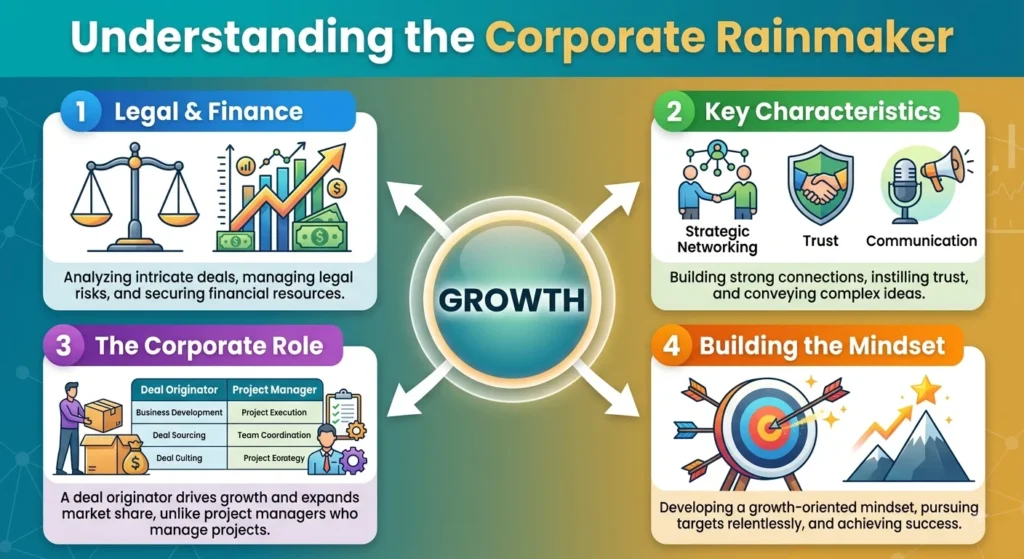
To understand the core rainmaker meaning, one must trace its journey from sacred cultural traditions to modern corporate culture.
1. The Historical & Cultural Origins
Historically, the term originated in Indigenous American traditions, where a rainmaker was a respected community figure or spiritual leader believed to perform ceremonies, dances, or rituals to bring rain during severe droughts. Because water was crucial for crop survival and community prosperity, the rainmaker was seen as a vital figure who brought life and abundance out of dry, challenging times.
2. The Corporate Transformation
In the mid-twentieth century, American business culture adopted the phrase as a metaphor. Just as traditional rainmakers brought essential water to dry fields, corporate rainmakers bring crucial revenue and deals to dry pipelines.
"In a dry market, a true rainmaker doesn't wait for opportunities—
they create the climate where deals happen naturally."
Furthermore, the term gained widespread pop culture prominence through John Grisham’s famous 1995 legal thriller The Rainmaker (and its subsequent film adaptation). Consequently, the word became permanently entrenched in the public imagination as the ultimate title for elite legal and financial dealmakers.
Contextual Dynamics & Nuances of the Term
However, the specific responsibilities of a rainmaker shift depending on the industry and organizational structure.
1. In Law Firms (Legal Industry)
In legal practice, a rainmaker is typically a senior partner who possesses an extensive network of corporate executives, high-net-worth individuals, or institutional leaders.
- Client Acquisition: They spend less time writing legal briefs and more time securing million-dollar retainers and corporate clients.
- Firm Equity: Because they control crucial client relationships, rainmakers hold immense leverage and usually command the highest compensation structures in the firm.
2. In Investment Banking & Venture Capital
In finance, rainmakers originate major mergers and acquisitions (M&A), structure initial public offerings (IPOs), or raise venture capital funds.
- Deal Origination: They leverage personal credibility to connect capital seekers with major institutional investors.
- Market Influence: Their involvement in a deal often serves as a stamp of approval, attracting other participants to join.
3. In Corporate Sales & Enterprise Growth
In broader enterprise businesses, a rainmaker is a top-performing sales director or business development executive who consistently exceeds revenue targets by closing massive multi-year enterprise contracts.
How Rainmakers Differ from Other Corporate Roles
Understanding how a rainmaker functions compared to other high-performing team members helps clarify why their role is unique.
| Role | Primary Focus | Key Skillset |
| Rainmaker | Revenue generation & client origination | Relationship building, vision, influence, trust |
| Grinder / Doer | Execution & task completion | Technical expertise, detail-oriented production |
| Minder / Manager | Team oversight & client retention | Operations, account management, organization |
| Strategist | Long-term planning & market analysis | Research, modeling, structural design |
Real-Life Conversation Examples
Reviewing everyday workplace dialogue shows how professionals use the term across business settings.
1. Discussing Partner Recruitment at a Law Firm
Alex: I heard the firm just hired a new senior partner from the Chicago office.
Sarah: Absolutely! She’s a well-known rainmaker in corporate litigation.
Alex: That’s huge for our growth goals!
Sarah: Exactly! She’s expected to bring several Fortune 500 client accounts with her.
2. Planning an Investment Campaign
Jordan: Our startup needs to raise its Series B round within the next six months.
Taylor: Let’s connect with Marcus on our advisory board—he’s a absolute rainmaker in venture capital.
Jordan: Great idea! Furthermore, his introduction will instantly open doors with top-tier VC firms.
3. Evaluating Quarterly Performance
Maya: The sales team crushed their enterprise revenue goals this quarter.
Chloe: Thanks in large part to Elena! She closed three major contracts single-handedly.
Maya: She’s truly become the primary rainmaker for our cloud software division!
How to Become a Rainmaker: Core Habits & Traits
Becoming a recognized rainmaker requires developing specific mindsets and interpersonal habits over time:
- Cultivate Deep Relationships: Focus on authentic connection rather than transactional networking. Rainmakers build trust long before they ask for business.
- Understand Client Pain Points: Listen actively to identify underlying operational or financial problems, then position your organization as the solution.
- Build Personal Authority: Publish insights, speak at industry panels, and position yourself as a thought leader in your domain.
- Deliver Consistent Value: Connect people in your network with opportunities, even when there is no immediate financial payout for you.
- Master the Art of Closing: Combine technical understanding with persuasive communication to navigate complex deal structures confidently.
FAQs
What is the primary rainmaker meaning in business?
In business, a rainmaker is a top-performing professional who consistently generates exceptional revenue, attracts lucrative new clients, or closes major commercial deals for an organization.
Why are rainmakers so valuable to law firms?
Rainmakers are vital to law firms because they bring in the high-value corporate clients that keep attorneys busy and maintain firm profitability and prestige.
Can anyone become a rainmaker?
Yes! While some people naturally excel at networking, rainmaking skills—such as relationship management, industry positioning, and strategic selling—can be systematically learned and practiced.
What is the difference between a rainmaker and a sales manager?
A sales manager oversees team operations, quotas, and strategy, whereas a rainmaker personally originates and closes high-stakes deals using their personal network and authority.
Where did the term “rainmaker” originally come from?
The term originally comes from Indigenous American weather traditions, referring to spiritual leaders or community figures believed to perform rituals to bring rain during dry seasons.
What is the difference between a “rainmaker” and a “grinder”?
In corporate terminology, a rainmaker focuses on bringing in new business and clients, whereas a grinder focuses on technical execution and completing the actual work.
How are rainmakers compensated in corporate settings?
Because of their direct impact on the bottom line, rainmakers usually command higher compensation, higher equity stakes, larger bonus structures, or generous profit-sharing arrangements.
What industries rely most heavily on rainmakers?
Rainmakers are especially critical in professional services such as corporate law, investment banking, private equity, venture capital, commercial real estate, and enterprise software sales.
Is a rainmaker the same as a business development manager?
While both bring in new business, a rainmaker often operates at a higher executive or partner level, leveraging deep personal networks and high authority rather than cold outreach pipelines.
How do company cultures retain top rainmakers?
Companies retain rainmakers by offering competitive equity packages, providing strong operational support teams (grinders/minders), and granting them autonomy to pursue key relationships.
Conclusion
Ultimately, every growing organization depends on individuals who can create opportunities where none previously existed. The evolution of the term demonstrates how an ancient cultural symbol transformed into a cornerstone concept of modern business success. Whether you are aiming to advance in a law firm, scale a tech startup, or expand your professional network, developing a rainmaker mindset empowers you to drive meaningful growth and achieve lasting career impact.

Andrew Morris is a writer at Meaninga.com who specializes in word meanings, slang, idioms and modern language trends. He creates clear, accurate and easy to understand content for everyday readers.