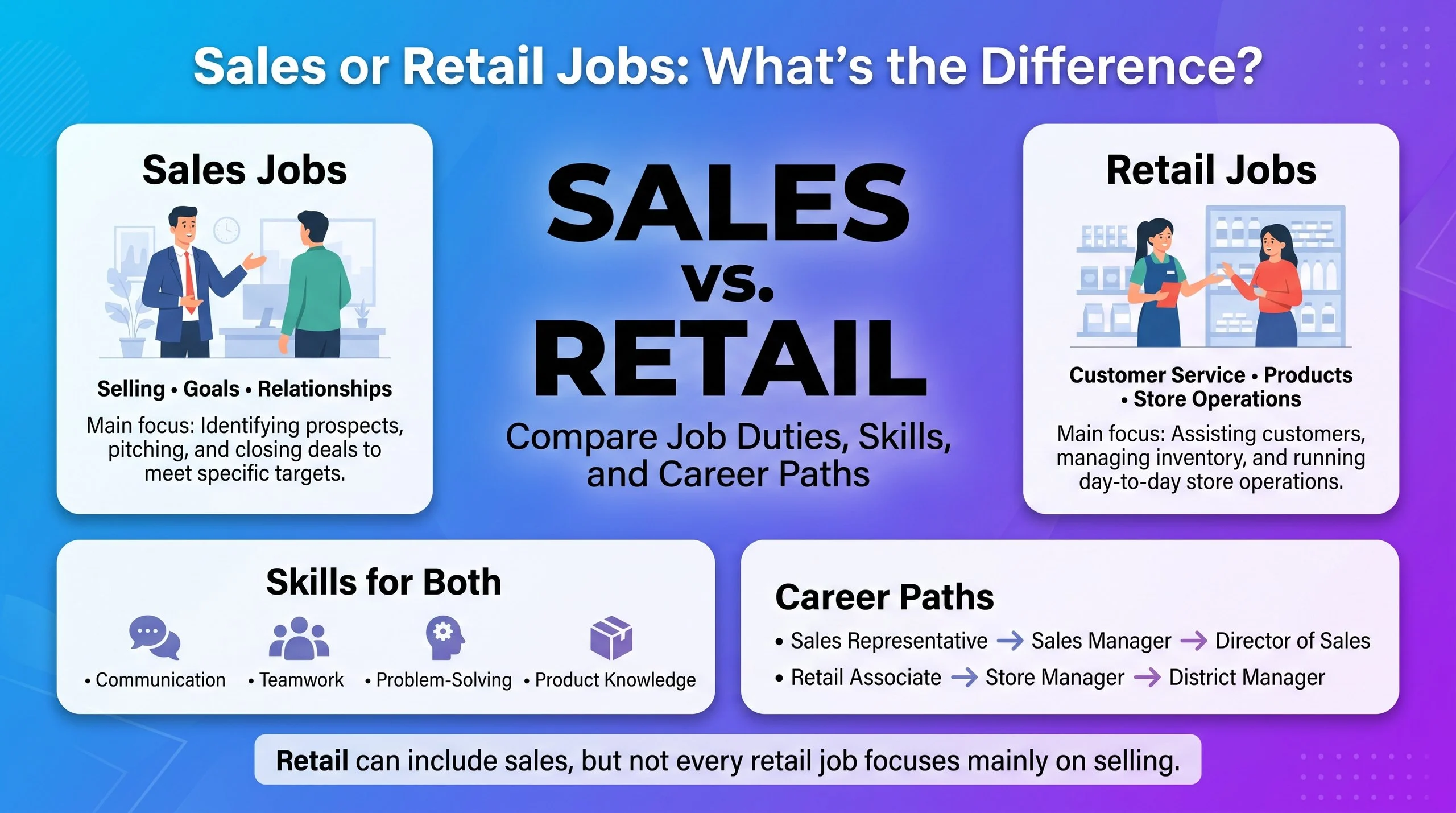
Sales jobs focus on selling products or services and meeting sales goals, while retail jobs usually involve working in stores, helping customers, handling purchases, and managing merchandise. Some positions combine both types of work, such as retail sales associate jobs.
Sales or retail jobs can be good career options for people who enjoy communicating with customers, solving problems, and working in a team. Although the terms often overlap, they do not always describe the same type of work. Sales jobs may involve selling products over the phone, meeting business clients, promoting services, or working toward sales targets. Retail jobs usually involve working in shops, supermarkets, department stores, or other retail businesses. Employees may help shoppers, organize merchandise, process payments, and answer product questions. Some retail positions focus mainly on customer service, while others emphasize selling. Understanding the difference can help you choose a job that matches your interests, skills, and career goals. This guide explains common job titles, responsibilities, required skills, earning opportunities, and how to decide which path may suit you.
What Are Sales or Retail Jobs?
Sales and retail jobs involve working with customers, but their main responsibilities can differ.
A sales job focuses on selling a product or service. Employees identify customer needs, explain available options, answer questions, and encourage customers to make informed purchasing decisions.
A retail job generally involves working in a store or retail business. Employees may assist shoppers, operate cash registers, arrange products, manage inventory, handle returns, or support daily store operations.
For example, a person who sells software subscriptions to businesses has a sales job. Someone who helps customers choose clothing in a department store has a retail job. A worker selling phones inside an electronics shop may do both.
The key difference is that sales describes a type of work, while retail describes a business sector where many different jobs are available.
What Are Sales Jobs?
Sales jobs involve promoting and selling products or services to individuals or businesses. Depending on the position, employees may work in an office, store, call center, showroom, or customer-facing field role.
Some sales professionals respond to customers who already want information. Others contact potential customers, develop business relationships, or negotiate agreements.
Common Types of Sales Jobs
1. Sales Associate
Sales associates help customers understand products, compare options, and complete purchases. They may work in retail stores, showrooms, or specialty shops.
2. Sales Representative
Sales representatives explain products or services, contact potential customers, maintain relationships, and work toward sales goals. Some positions involve business-to-business sales.
3. Sales Consultant
Sales consultants help customers choose solutions based on their needs and budgets. These roles may involve electronics, vehicles, furniture, technology, or other specialized products.
4. Inside Sales Representative
Inside sales representatives usually communicate with customers remotely through phone calls, email, video meetings, or online tools.
5. Outside Sales Representative
Outside sales representatives may travel to meet customers, visit businesses, demonstrate products, and develop professional relationships.
6. Account Manager
Account managers maintain relationships with existing customers. Their responsibilities may include answering questions, resolving concerns, renewing agreements, and identifying additional opportunities.
7. Sales Manager
Sales managers supervise sales teams, monitor performance, set goals, and help employees improve their results.
What Are Retail Jobs?
Retail jobs involve supporting the sale of goods and the daily operation of stores. Retail businesses include supermarkets, clothing shops, pharmacies, electronics stores, furniture showrooms, and many other establishments.
Some retail employees spend most of their time assisting customers. Others focus on stock management, checkout operations, product displays, or supervising store teams.
Common Types of Retail Jobs
1. Retail Sales Associate
Retail sales associates help shoppers find products, explain features, recommend suitable options, and complete sales.
2. Cashier
Cashiers process payments, handle transactions, issue receipts, and may assist with returns or basic customer questions.
3. Store Associate
Store associates often perform several tasks, such as helping customers, replenishing shelves, organizing products, and supporting checkout operations.
4. Stock Associate
Stock associates receive deliveries, organize storage areas, replenish shelves, and help maintain accurate inventory.
5. Customer Service Associate
Customer service associates answer questions, handle complaints, explain store policies, and assist with exchanges or returns.
6. Retail Supervisor
Retail supervisors help coordinate shifts, support employees, monitor store standards, and address day-to-day operational problems.
7. Store Manager
Store managers oversee staff, inventory, customer service, scheduling, and store performance. They may also be responsible for budgets and sales results.
Sales vs. Retail Jobs: What’s the Difference?
Although the two categories overlap, their typical responsibilities are different.
| Feature | Sales Jobs | Retail Jobs |
|---|---|---|
| Main focus | Selling products or services | Supporting customers and store operations |
| Work location | Offices, stores, call centers, or field locations | Usually stores or retail establishments |
| Customer contact | In person, by phone, online, or through meetings | Often face-to-face |
| Sales targets | Common in many roles | Depends on the position |
| Inventory duties | Sometimes required | Common in many store roles |
| Payment processing | Depends on the job | Common in customer-facing store roles |
| Commission | Available in some positions | May be available in sales-focused positions |
| Work schedule | Varies by industry and role | May include evenings, weekends, and holidays |
| Career progression | Senior sales, account management, or sales leadership | Senior associate, supervisor, or store management |
These are general patterns rather than strict rules. A retail sales associate may have sales targets and commissions, while a sales representative may have no responsibility for inventory or checkout operations.
Is Retail a Type of Sales Job?
Retail can include sales, but not every retail job is primarily a sales position.
Consider an electronics store. One employee may explain phone features and recommend a suitable device. Another may operate the checkout, while a third organizes deliveries and replenishes shelves.
All three employees work in retail, but their daily responsibilities differ.
The first employee performs retail sales. The cashier focuses on payment processing, and the stock associate supports inventory operations.
This distinction matters when applying for jobs. Read the job description carefully rather than relying only on the title.
Which Skills Do Sales and Retail Employers Look For?
Many sales and retail positions require similar skills. However, some jobs place greater emphasis on persuasion, negotiation, technical knowledge, or store operations.
Communication Skills
Employees need to explain information clearly, ask useful questions, and listen to customers. Strong communication helps prevent misunderstandings and improves the customer experience.
Customer Service
Workers should treat customers respectfully, respond to questions, and handle concerns professionally. Good service can help build customer trust.
Product Knowledge
Employees need to understand the products or services they offer. Depending on the role, this may include product features, prices, warranties, promotions, and care instructions.
Problem-Solving
Customers may need help comparing products, finding alternatives, or resolving issues. Employees should be able to identify the problem and explain practical options.
Teamwork
Sales and retail workers often coordinate with coworkers, supervisors, warehouse teams, and customer service departments.
Organization
Retail employees may manage shelves, deliveries, inventory, and checkout tasks. Sales professionals may organize customer records, follow-up calls, appointments, and sales opportunities.
Persuasion and Negotiation
These skills are particularly useful in sales-focused roles. Successful salespeople understand customer needs and explain relevant benefits without making misleading promises or applying inappropriate pressure.
Do Sales or Retail Jobs Require Experience?
Many entry-level sales and retail positions accept applicants with limited or no previous experience. Employers may provide training in customer service, product knowledge, payment systems, and workplace procedures.
Requirements vary by employer and industry. Some specialized sales roles require previous experience, technical knowledge, a degree, or a professional license.
If you are applying for your first job, look for titles such as:
- Entry-level sales associate
- Retail associate
- Store assistant
- Customer service representative
- Cashier
- Junior sales representative
- Sales trainee
When preparing your application, emphasize transferable skills. School projects, volunteer work, customer-facing activities, and previous responsibilities can demonstrate communication, reliability, and teamwork.
Sales or Retail Jobs: Which Pays More?
There is no universal answer because earnings depend on the industry, location, employer, experience, working hours, and compensation structure.
Some sales jobs offer a base salary plus commission or performance bonuses. These arrangements may provide higher earning potential, but actual income can depend on sales results.
Retail jobs may offer hourly wages, salaries, employee discounts, bonuses, or commissions, depending on the employer and position.
For a fair comparison, check:
- Base salary or hourly wage
- Commission and bonus conditions
- Guaranteed working hours
- Overtime arrangements
- Benefits and paid leave
- Sales targets and performance expectations
- Training and promotion opportunities
Do not compare a sales job’s advertised maximum earnings with a retail job’s guaranteed pay. Review the full compensation package and understand whether commissions are guaranteed or variable.
Career Growth in Sales and Retail
Both fields can offer opportunities for advancement.
Sales Career Path
A possible progression is:
- Entry-level sales associate
- Sales representative
- Senior sales representative
- Account manager or team leader
- Sales manager
- Sales director or commercial leadership role
The exact path depends on the employer and industry. Some people specialize in areas such as technology, healthcare products, financial services, or business-to-business sales.
Retail Career Path
A possible progression is:
- Retail associate
- Senior sales associate
- Department supervisor
- Assistant store manager
- Store manager
- District or regional manager
Retail workers may also move into merchandising, inventory planning, training, loss prevention, or corporate retail operations.
Experience in either field can develop transferable skills useful for future customer-facing and management roles.
How to Choose Between Sales and Retail Jobs
The best option depends on the kind of work you enjoy and the conditions you prefer.
Choose a Sales Job If You Prefer:
- Selling products or services
- Building customer relationships
- Working toward measurable goals
- Explaining benefits and comparing solutions
- Negotiating or developing business opportunities
- Potential commission-based earnings
Choose a Retail Job If You Prefer:
- Working in a store environment
- Helping shoppers in person
- Organizing products and displays
- Supporting checkout and inventory tasks
- Working with a store team
- Following established daily procedures
However, do not assume that every sales job involves commission or that every retail job is less demanding. Workloads, schedules, and performance expectations vary widely.
Before accepting an offer, review the actual responsibilities, schedule, pay structure, training, and opportunities for advancement.
Common Mistakes When Comparing Sales and Retail Jobs
1. Assuming Sales and Retail Are Completely Separate
Many retail employees sell products, and some sales roles take place inside stores. The categories overlap.
2. Choosing a Job Based Only on Commission
Commission may increase earnings, but it can also make income less predictable. Check the base pay and bonus rules before deciding.
3. Ignoring the Job Description
Two employers may use the same job title for different responsibilities. Read the listed duties carefully.
4. Overlooking Transferable Skills
Customer service, communication, organization, and teamwork can help candidates move between sales and retail roles.
5. Assuming Experience Is Always Required
Some employers train entry-level candidates. Check the requirements instead of automatically ruling yourself out.
Frequently Asked Questions
1. What is the difference between sales and retail jobs?
Sales jobs focus on selling products or services. Retail jobs usually involve working in stores and may include sales, customer service, checkout operations, and inventory tasks.
2. Is a retail sales associate a sales job?
Yes. A retail sales associate typically assists customers, recommends products, explains features, and helps complete purchases. The role combines retail work with selling.
3. Can I get a sales or retail job without experience?
Yes. Some entry-level positions provide on-the-job training and do not require previous experience. Requirements depend on the employer and role.
4. Do sales jobs pay more than retail jobs?
Not always. Some sales positions offer commissions or bonuses, while others pay a fixed salary. Retail earnings also vary by employer, role, location, and experience.
5. Which is easier, sales or retail?
Neither is always easier. Retail may involve standing for long periods, busy shifts, and store operations. Sales may involve targets, rejection, negotiation, and follow-up responsibilities.
6. What are the best entry-level retail jobs?
Retail associate, cashier, stock associate, customer service associate, and retail sales associate positions can be accessible starting points. Check each employer’s requirements.
7. What are common entry-level sales jobs?
Sales associate, junior sales representative, inside sales representative, and sales trainee are common entry-level options. Some roles provide structured training.
8. Can retail experience help me get a sales job?
Yes. Retail experience can demonstrate customer service, communication, product knowledge, and selling skills. These abilities can be useful when applying for other sales positions.
Conclusion
Sales or retail jobs can both provide valuable experience and opportunities for career growth. Sales positions generally focus on selling products or services, developing customer relationships, and meeting goals. Retail positions often combine customer assistance with store operations, inventory, and checkout responsibilities. Because the roles overlap, the job description is more important than the title alone. Compare the pay structure, working hours, responsibilities, training, and advancement opportunities before choosing a position. Whether you begin in retail or sales, strong communication, reliability, problem-solving, and customer service skills can help you build a foundation for future career opportunities.

Andrew Morris is a writer at Meaninga.com who specializes in word meanings, slang, idioms and modern language trends. He creates clear, accurate and easy to understand content for everyday readers.