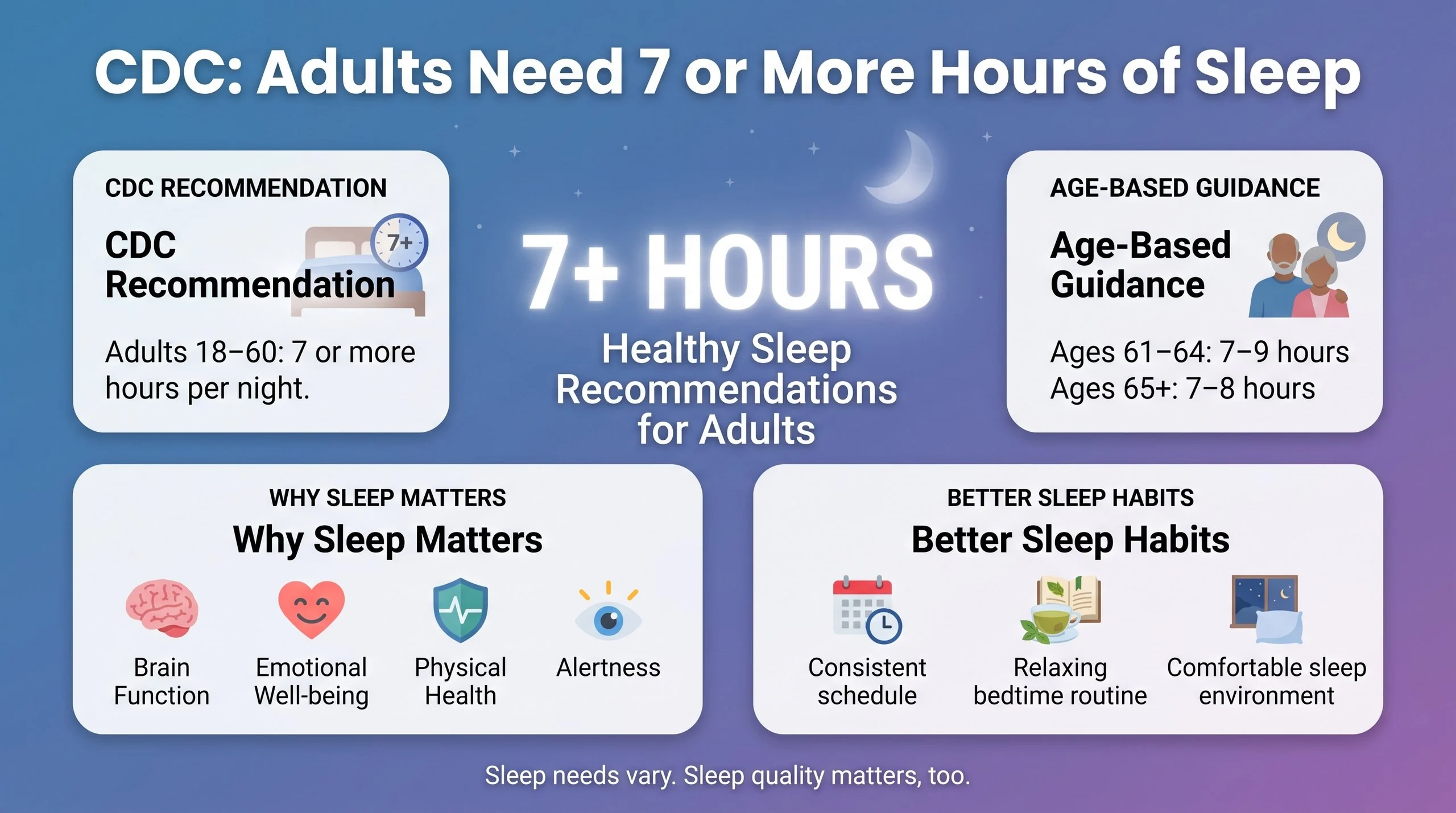
The CDC recommends that adults aged 18–60 get at least 7 hours of sleep each night. Adults aged 61–64 generally need 7–9 hours, while adults aged 65 and older need 7–8 hours. Regular, quality sleep supports physical health, emotional well-being, and daily performance.
The CDC recommends that adults get 7 or more hours of sleep each night to support their health and well-being. Sleep is essential for the brain and body because it helps regulate mood, improve attention, and support everyday functioning. However, many adults do not get enough rest because of busy schedules, work demands, stress, or sleep difficulties. Regularly sleeping less than the recommended amount is associated with a higher risk of several health problems. Still, sleep needs vary with age, and the number of hours matters alongside sleep quality. Understanding the Centers for Disease Control and Prevention (CDC) sleep recommendations can help adults build healthier routines. This guide explains how much sleep adults need, why adequate rest matters, and what practical steps may help improve sleep habits.
What Does the CDC Recommend for Adult Sleep?
The CDC recommends at least seven hours of sleep per night for adults aged 18–60. Older adults have slightly different recommended ranges. <Cite refs={[“turn382649search0”]}/>
Here is the CDC’s general age-based guidance:
| Age Group | Recommended Sleep |
|---|---|
| Adults aged 18–60 | 7 or more hours |
| Adults aged 61–64 | 7–9 hours |
| Adults aged 65 and older | 7–8 hours |
These recommendations are general guidelines, not a guarantee that the same amount will suit everyone. Sleep quality, health, and individual circumstances also matter.
The goal is to get enough consistent, restorative sleep to feel rested and function well during the day.
Why Do Adults Need 7 or More Hours of Sleep?
Sleep supports several important processes in the body. Regularly getting enough sleep can help maintain physical health, emotional balance, and mental performance.
1. Supports Brain Function
Adequate sleep helps support attention, learning, memory, and decision-making. When people regularly sleep too little, they may find it harder to concentrate or respond quickly.
For example, a well-rested person may find it easier to focus during a meeting or remember information learned during the day.
2. Helps Regulate Mood
Sleep and emotional well-being are closely connected. Insufficient sleep may contribute to irritability, stress, and difficulty managing emotions.
A consistent sleep schedule can help support a more stable daily routine. However, sleep alone does not prevent or treat every mental health concern.
3. Supports Physical Health
The body uses sleep to support normal biological processes, including immune function and cardiovascular health. Regularly getting insufficient sleep is associated with an increased risk of conditions such as high blood pressure, heart disease, diabetes, and obesity. <Cite refs={[“turn382649search8″,”turn382649search12”]}/>
These associations do not mean that sleeping too little will automatically cause a particular condition. Health outcomes depend on many factors.
4. Improves Alertness and Safety
Insufficient sleep can reduce alertness and slow reaction times. This can affect driving, operating machinery, and other activities that require attention.
Getting enough sleep is therefore important not only for personal well-being but also for everyday safety.
5. Supports Daily Performance
People who consistently get enough sleep may find it easier to stay focused and manage routine tasks. By contrast, poor sleep can make ordinary responsibilities feel more difficult.
Adequate rest can support productivity, but it is not a substitute for other healthy habits or appropriate medical care.
What Happens If Adults Get Less Than 7 Hours of Sleep?
Occasionally sleeping less than seven hours does not automatically mean someone has a health problem. However, regularly getting insufficient sleep can affect how a person feels and functions.
Possible effects include:
- Daytime tiredness and sleepiness
- Difficulty concentrating
- Slower reaction times
- Irritability or mood changes
- Reduced attention and productivity
- Increased risk of accidents
- Associations with certain long-term health conditions
The impact can vary from person to person. Some people may notice immediate tiredness, while others may underestimate how much insufficient sleep affects their performance.
If you regularly struggle to sleep, wake up feeling unrefreshed, or experience excessive daytime sleepiness, consider discussing the problem with a healthcare professional.
How Can Adults Get 7 or More Hours of Sleep?
Building a healthier sleep routine often starts with small, consistent changes.
1. Keep a Regular Sleep Schedule
Try to go to bed and wake up at similar times every day, including weekends. A regular schedule can help your body maintain a consistent sleep-wake rhythm.
If your current schedule varies considerably, adjust it gradually rather than making a sudden, difficult change.
2. Create a Relaxing Bedtime Routine
Choose calming activities before bed, such as reading, taking a warm shower, or listening to quiet music.
A predictable routine can help you transition from daytime activities to rest. Avoid turning bedtime into another stressful task.
3. Make Your Bedroom Comfortable
A sleep-friendly bedroom should be quiet, dark, and comfortably cool when possible. Reducing distracting light and noise may help you fall asleep and stay asleep.
You can also adjust bedding, room temperature, and other surroundings to suit your needs.
4. Reduce Evening Caffeine
Caffeine can interfere with sleep, particularly when consumed later in the day. Consider limiting coffee, energy drinks, tea, and other caffeinated products in the hours before bedtime.
Sensitivity varies, so pay attention to how caffeine affects your sleep.
5. Be Mindful of Alcohol and Heavy Meals
Alcohol may make some people feel sleepy at first, but it can disrupt sleep later in the night. Large meals close to bedtime may also cause discomfort for some people.
Consider leaving enough time between your evening meal and bedtime to feel comfortable.
6. Get Regular Physical Activity
Regular exercise can support overall health and may help improve sleep. Choose activities that fit your abilities and schedule.
If exercising close to bedtime makes you feel more alert, try moving vigorous activity earlier in the day.
7. Manage Stress Before Bed
Worry and racing thoughts can make it harder to fall asleep. Writing down tomorrow’s tasks, practicing gentle breathing, or using a brief relaxation routine may help.
If stress continues to interfere with sleep, professional support may be useful.
8. Seek Help for Persistent Sleep Problems
Good sleep habits can help, but they do not resolve every sleep problem. Persistent difficulty falling asleep, frequent waking, loud snoring, gasping during sleep, or ongoing daytime sleepiness may warrant medical evaluation.
A healthcare professional can help determine whether an underlying sleep disorder or another issue needs attention.
Does Everyone Need Exactly 7 Hours of Sleep?
No. The CDC’s recommendation is a minimum for adults aged 18–60, not an exact target for every person.
Some adults feel well rested with seven hours, while others need more. Adults aged 61–64 are generally advised to get 7–9 hours, and those aged 65 and older are advised to get 7–8 hours. <Cite refs={[“turn382649search0”]}/>
Sleep needs may also be affected by individual health, daily demands, and sleep quality. For that reason, getting seven hours does not necessarily mean your sleep is sufficient if you still feel persistently tired.
Pay attention to both the amount of sleep you get and how you feel during the day.
Sleep Duration vs. Sleep Quality
Sleep duration describes how long you sleep. Sleep quality refers to how restful and uninterrupted that sleep is.
Both matter.
For example, someone may spend eight hours in bed but wake frequently throughout the night. Another person may sleep for a similar period with fewer interruptions and feel more refreshed in the morning.
Signs that your sleep may not be restorative include:
- Waking up tired despite allowing enough time for sleep
- Waking repeatedly during the night
- Feeling excessively sleepy during the day
- Regularly struggling to stay alert
If these issues persist, consider seeking professional advice rather than focusing only on the number of hours.
Common Misunderstandings About the CDC Sleep Recommendation
1. Thinking Seven Hours Is Enough for Every Adult
Seven hours is the recommended minimum for adults aged 18–60, but individual needs vary. Some people need more sleep to feel rested.
2. Assuming Time in Bed Equals Time Asleep
Spending seven or eight hours in bed does not guarantee that you actually slept for that long. Frequent waking or difficulty falling asleep can reduce total sleep time.
3. Believing One Short Night Automatically Causes Disease
Long-term insufficient sleep is associated with several health risks, but one night of poor sleep does not automatically cause a chronic condition.
4. Ignoring Persistent Daytime Sleepiness
Ongoing tiredness may have several causes, including poor sleep quality or a sleep disorder. It should not always be dismissed as normal busyness.
5. Forgetting That Sleep Recommendations Change With Age
Children and teenagers generally need more sleep than adults. Older adults also have age-specific recommended ranges, so the seven-hour minimum should not be applied to every age group.
Frequently Asked Questions
1. Does the CDC say adults need 7 or more hours of sleep?
Yes. The CDC recommends at least seven hours per night for adults aged 18–60. Recommendations for older adults vary by age.
2. Is 6 hours of sleep enough for an adult?
Six hours is below the CDC’s recommended minimum for adults aged 18–60. Although individual needs vary, regularly sleeping only six hours may leave many adults short of the sleep they need.
3. Is 7 hours of sleep better than 8?
Both can be appropriate. Seven hours meets the CDC’s minimum recommendation for adults aged 18–60, while some adults may feel better with eight hours or more.
4. How much sleep should adults over 65 get?
The CDC recommends 7–8 hours of sleep per night for adults aged 65 and older. Individual needs and sleep quality still matter.
5. What are the risks of regularly getting less than 7 hours of sleep?
Regularly getting insufficient sleep is associated with problems involving attention, alertness, and safety, as well as a higher risk of certain chronic health conditions.
6. Can sleeping more than 9 hours be unhealthy?
Longer sleep is not automatically unhealthy. Sleep needs vary, and extra sleep may be appropriate in some circumstances. If you regularly need unusually long sleep and still feel tired, discuss it with a healthcare professional.
7. What is the best bedtime for adults?
There is no single ideal bedtime for everyone. The best schedule allows you to get enough sleep consistently while matching your work, family, and daily responsibilities.
8. What should I do if I get 7 hours of sleep but still feel tired?
Consider your sleep quality, schedule, medications, and other possible factors. If tiredness continues or affects daily life, consult a healthcare professional to discuss possible causes.
Conclusion
The CDC recommends that adults aged 18–60 get at least seven hours of sleep each night, while older adults have age-specific sleep recommendations. Adequate sleep supports brain function, emotional well-being, physical health, alertness, and everyday safety. However, healthy sleep involves more than meeting a number. Consistent routines, a comfortable sleeping environment, and attention to persistent sleep difficulties can all help support better rest. If you regularly feel tired despite allowing enough time for sleep, consider seeking professional advice. Making sleep a consistent priority is a practical step toward better overall well-being.