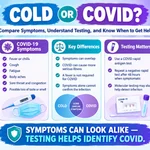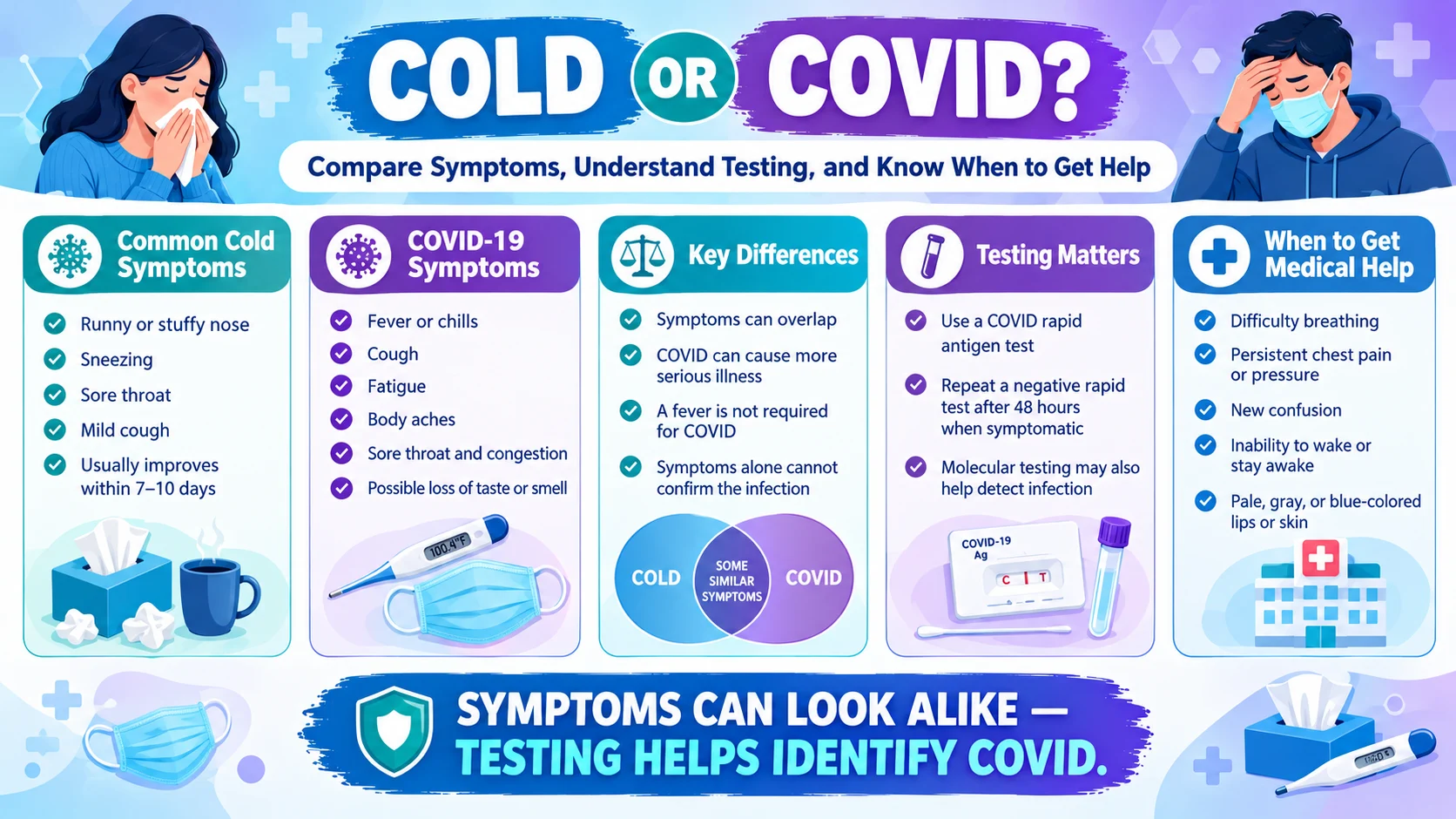
A cold or COVID can cause similar symptoms, including a sore throat, cough, congestion, fatigue, and a runny nose. However, COVID-19 can also cause fever, body aches, loss of taste or smell, and more serious breathing problems. Because symptoms overlap, you cannot reliably tell the difference based on symptoms alone. A COVID test can help identify the infection and guide your next steps.
Cold or COVID is a common question when you develop a sore throat, stuffy nose, cough, or unusual tiredness. Both illnesses affect the respiratory system, so their early symptoms can feel almost identical. In fact, COVID-19 may begin with symptoms that seem like an ordinary cold.
However, some clues can help you understand what might be happening. A cold often causes milder symptoms, while COVID-19 can produce a wider range of effects and may become serious in some people. Still, symptom patterns vary from person to person.
Therefore, testing matters when COVID-19 is possible. This guide compares common symptoms, explains when to test, discusses how long each illness may last, and identifies warning signs that deserve medical attention. It also explains what to do while you recover.
Cold vs. COVID
| Feature | Common Cold | COVID-19 |
|---|---|---|
| Cause | Many respiratory viruses | SARS-CoV-2 virus |
| Runny or stuffy nose | Common | Can occur |
| Sneezing | Common | Can occur |
| Sore throat | Common | Common |
| Cough | Often mild | Can be mild or severe |
| Fever | Less common in adults | Can occur |
| Fatigue | Usually mild | Can be more noticeable |
| Body aches | Sometimes | Can occur |
| Loss of taste or smell | Unusual | Possible |
| Shortness of breath | Unusual | Possible; needs attention |
| Diagnosis | Usually based on symptoms | COVID test can confirm infection |
Important: These patterns are general, not diagnostic rules. Because symptoms overlap, a person with COVID-19 may feel like they have a mild cold. Likewise, a cold can sometimes cause significant discomfort.
What Are the Symptoms of a Common Cold?
A common cold is a viral infection of the upper respiratory tract. It usually affects the nose and throat. Although many viruses can cause colds, rhinoviruses are among the most common causes.
Symptoms often develop gradually. For example, you may first notice a scratchy throat or frequent sneezing. Then, a runny nose, congestion, and cough may appear.
Common cold symptoms include:
- Runny or stuffy nose
- Sneezing
- Sore or scratchy throat
- Mild cough
- Watery eyes
- Mild headache
- Slight body aches
- Tiredness
- Occasionally, a low-grade fever
Most adults recover without special treatment. However, children and people with certain health conditions may experience more complications.
In general, cold symptoms improve within about a week, although a cough or congestion can last longer. Rest, fluids, and appropriate over-the-counter medicines may help manage discomfort.
What Are the Symptoms of COVID-19?
COVID-19 is an infectious respiratory illness caused by the SARS-CoV-2 virus. It can affect the upper respiratory tract, lungs, and other parts of the body.
Symptoms range from mild to severe. Some people experience only a sore throat or runny nose, while others develop fever, significant fatigue, or breathing difficulties.
Common symptoms include:
- Fever or chills
- Cough
- Sore throat
- Runny or stuffy nose
- Fatigue
- Headache
- Muscle or body aches
- Shortness of breath
- Nausea or vomiting
- Diarrhea
- New loss of taste or smell
However, not everyone develops every symptom. Some people with COVID-19 have no noticeable symptoms at all.
In addition, symptoms can change as the infection progresses. Therefore, do not assume that a lack of fever or loss of smell rules out COVID-19.
How Can You Tell the Difference Between a Cold and COVID?
Unfortunately, there is no dependable symptom checklist that can always separate these illnesses. Nevertheless, a few patterns may provide clues.
A Gradual Runny Nose and Sneezing
A runny nose, sneezing, and mild throat irritation often occur with a common cold. If these symptoms develop gradually and remain mild, a cold may be one possibility.
However, COVID-19 can cause the same symptoms. Therefore, this pattern does not rule it out.
Fever, Chills, and Body Aches
Fever and chills can occur with COVID-19. Some people also experience stronger body aches and fatigue.
By comparison, adults with a common cold do not always develop a fever. Still, fever alone cannot confirm COVID-19.
Loss of Taste or Smell
A new loss of taste or smell can occur with COVID-19. This symptom became widely recognized during earlier stages of the pandemic.
However, it is not present in every case. Consequently, its absence does not mean you cannot have COVID-19.
Unusual Fatigue or Breathing Problems
COVID-19 may cause pronounced fatigue or shortness of breath. These symptoms deserve attention, especially if they interfere with everyday activities.
A common cold usually causes upper respiratory symptoms without significant breathing difficulty. If breathing becomes difficult, seek medical care rather than trying to identify the illness at home.
When Should You Take a COVID Test?
Testing is useful when you have symptoms that could be caused by COVID-19. It is especially important after a known exposure or before spending time with someone at higher risk of severe illness.
You can use a rapid antigen test at home or a molecular test, such as a PCR test, when available.
For a rapid antigen test:
- Test when symptoms begin.
- If the first result is negative, repeat the test 48 hours later.
- If you have no symptoms but were exposed, follow current testing guidance and the test instructions.
A single negative rapid antigen result does not always rule out COVID-19. This is because the amount of virus in your body may be too low for the test to detect early in an infection.
Therefore, repeat testing or a more sensitive molecular test may be appropriate. Follow the current instructions for your specific test and local public health guidance.
How Long Do a Cold and COVID Last?
Recovery time varies depending on the virus, your immune response, age, and general health.
| Illness | Typical Recovery Pattern |
|---|---|
| Common cold | Often improves within 7–10 days |
| COVID-19 | Many mild cases improve within 1–2 weeks |
| Lingering cough or fatigue | May continue after other symptoms improve |
A common cold usually improves steadily. Nevertheless, congestion or coughing may continue for a little longer.
COVID-19 recovery is less predictable. Some people feel better within several days, while others need more time. In addition, some people experience lingering symptoms after the initial infection.
If symptoms worsen instead of improving, consider contacting a healthcare professional. Similarly, seek advice if a fever persists or new symptoms develop.
How Are Cold and COVID Treated?
There is no single treatment that cures every cold or COVID-19 infection. Instead, care focuses on relieving symptoms, supporting recovery, and preventing complications.
Treating a Common Cold
Most colds improve with time and supportive care. You can try:
- Getting enough rest
- Drinking water and other fluids
- Using saline nasal spray for congestion
- Using a humidifier if the air is dry
- Taking appropriate over-the-counter pain or fever medicine
- Using honey to soothe a cough in adults and children over one year old
However, antibiotics do not treat viruses. Therefore, they do not cure an ordinary cold unless a healthcare professional identifies a separate bacterial infection.
Treating COVID-19
Mild COVID-19 can often be managed at home with rest, fluids, and symptom relief.
However, people at higher risk of severe illness may qualify for antiviral treatment. These medicines work best when started early, so contact a healthcare professional promptly if you test positive and may be eligible.
Treatment decisions depend on factors such as age, medical history, medications, and the time symptoms began. Consequently, do not start prescription antiviral medicines without medical advice.
When Should You Seek Medical Attention?
Most mild respiratory infections can be managed at home. However, certain symptoms require urgent medical attention.
Seek emergency help if you experience:
- Difficulty breathing
- Persistent chest pain or pressure
- New confusion
- Inability to wake or stay awake
- Pale, gray, or blue-colored lips or skin
These symptoms can indicate a serious medical problem. Therefore, do not wait for a test result before seeking emergency care.
You should also contact a healthcare professional if symptoms become severe, worsen after initially improving, or do not improve as expected. People who are older, immunocompromised, pregnant, or living with certain chronic conditions may need earlier medical advice.
How to Prevent Spreading a Cold or COVID
Both illnesses can spread through respiratory particles released when an infected person breathes, talks, coughs, or sneezes.
Fortunately, everyday precautions can reduce transmission.
- Stay home while you are sick.
- Cover coughs and sneezes.
- Wash your hands regularly.
- Improve indoor ventilation.
- Consider wearing a well-fitting mask around others.
- Avoid close contact with people at higher risk.
- Clean frequently touched surfaces when appropriate.
Once symptoms improve and you have been fever-free for at least 24 hours without fever-reducing medicine, you can generally resume normal activities. However, take additional precautions for the next five days, especially around vulnerable people. Follow current local public health guidance because recommendations may change.
Can You Have COVID Without a Fever?
Yes. COVID-19 does not always cause a fever. Some people experience only a sore throat, runny nose, cough, headache, or fatigue.
Others have no symptoms at all. As a result, checking your temperature alone cannot determine whether you have COVID-19.
If you have possible symptoms or a known exposure, consider testing even when you do not have a fever. This is especially important if you will be around someone at higher risk of severe illness.
Can a Cold Turn Into COVID?
No. A common cold does not turn into COVID-19 because the illnesses are caused by different viruses.
However, you can mistake the early symptoms of COVID-19 for a cold. In addition, a person can catch more than one respiratory infection around the same time.
Therefore, a change in symptoms does not necessarily mean a cold has become something else. Testing can help identify COVID-19 when it is a possibility.
Is It a Cold, COVID, or the Flu?
The flu is another respiratory illness that can resemble both a cold and COVID-19. However, flu symptoms often begin suddenly and may include fever, chills, muscle aches, headache, and marked tiredness.
| Symptom | Cold | COVID-19 | Flu |
|---|---|---|---|
| Runny nose | Common | Possible | Possible |
| Sneezing | Common | Possible | Sometimes |
| Fever | Less common in adults | Possible | Common |
| Body aches | Usually mild | Possible | Often noticeable |
| Fatigue | Usually mild | Can be significant | Can be significant |
| Cough | Common | Common | Common |
| Sudden onset | Less typical | Possible | Often typical |
| Loss of taste or smell | Unusual | Possible | Unusual |
Even so, symptoms alone cannot reliably identify which infection you have. Testing may be needed to distinguish COVID-19 from flu, especially when treatment decisions depend on the result.
Frequently Asked Questions
How do I know if I have a cold or COVID?
Both illnesses can cause congestion, sore throat, coughing, and fatigue. However, symptoms overlap too much for a reliable diagnosis. A COVID-19 test is the best way to check whether you have COVID-19.
Does COVID start like a common cold?
Yes. COVID-19 can begin with a sore throat, runny nose, sneezing, congestion, or mild fatigue. Because these symptoms resemble a common cold, testing can help identify the infection.
Is a runny nose a sign of COVID or a cold?
A runny nose can occur with either illness. It is common with colds, but COVID-19 can also cause nasal symptoms. Therefore, a runny nose alone cannot tell you which infection you have.
Can you have COVID without a fever?
Yes. Many people with COVID-19 do not develop a fever. Instead, they may experience a sore throat, cough, congestion, headache, or fatigue. Testing can help confirm an infection even without fever.
How long does a cold last compared with COVID?
A common cold often improves within 7–10 days. Mild COVID-19 may improve within one or two weeks, although recovery varies. Some people experience lingering fatigue or coughing after the initial infection.
Should I take a COVID test if I only have a sore throat?
Yes, consider testing if COVID-19 is possible, particularly after an exposure or before visiting someone at higher risk. If a rapid test is negative, repeat it according to current test guidance.
Can you have a cold and COVID at the same time?
Yes. Although less common, a person can become infected with more than one respiratory virus at once. If symptoms are unusual, severe, or persistent, a healthcare professional can help determine what testing is appropriate.
When should I go to the hospital for COVID symptoms?
Seek emergency help for difficulty breathing, persistent chest pain or pressure, new confusion, inability to wake, or pale, gray, or blue-colored lips or skin. Do not delay emergency care while waiting for a test result.
Conclusion
Knowing whether you have a cold or COVID can be difficult because both illnesses share many symptoms. A runny nose, sore throat, cough, and fatigue may occur with either infection. However, COVID-19 can also cause fever, body aches, breathing problems, and other symptoms. Since these signs overlap, testing remains the most reliable way to check for COVID-19. Meanwhile, rest, drink fluids, and stay home while you are sick. Seek medical advice if symptoms worsen or you are at higher risk of complications. Most importantly, get emergency help for serious breathing problems or chest pain.